Understanding 2‑Step Word Problems in Addition and Subtraction
Second‑grade learners often encounter 2‑step word problems that require both addition and subtraction. These problems help students apply the Content.2.OA.A.1 standard, which emphasizes using addition and subtraction within 20 to solve real‑world situations. Mastering this skill builds a foundation for more complex mathematics and strengthens critical thinking.
Why 2‑Step Problems Matter
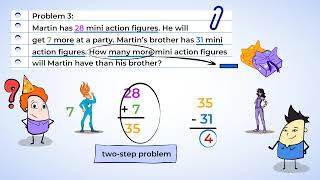
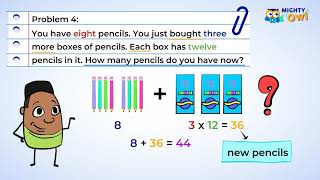
Unlike single‑step questions, 2‑step word problems ask students to perform a sequence of operations. For example, a problem may ask a child to first add two quantities and then subtract a third. This structure mirrors everyday tasks such as budgeting pocket money or sharing snacks, making the math relevant and engaging.
Key Learning Objectives
- Identify the relevant quantities in a problem.
- Determine the correct order of operations (addition first, then subtraction, or vice versa).
- Write a clear mathematical sentence that represents each step.
- Check the solution against the context of the problem.
Effective Strategies for Solving 2‑Step Word Problems
Teachers and parents can use several proven strategies to help students navigate these challenges:
- Read the problem twice. The first reading gives a general idea; the second helps spot numbers and keywords such as “altogether,” “left,” or “more.”
- Underline or highlight numbers. Visual cues assist in distinguishing between quantities that need to be added versus those that must be subtracted.
- Draw a simple diagram. A quick sketch—like a picture of apples or a number line—makes the relationships concrete.
- Label each step. Write “Step 1: ___ + ___ = ___” and “Step 2: ___ – ___ = ___” to keep the process organized.
- Verify the answer. Re‑read the question to ensure the final number makes sense in the story.
Sample Problems and Solutions
Below are three examples that illustrate typical 2‑step addition and subtraction scenarios aligned with the second‑grade standard.
Example 1
Problem: Maya has 8 red balloons. She buys 5 more balloons and then gives 3 balloons to her friend. How many balloons does Maya have now?
Solution:
- Step 1: Add the balloons she bought: 8 + 5 = 13.
- Step 2: Subtract the balloons she gave away: 13 – 3 = 10.
Answer: Maya has 10 balloons.
Example 2
Problem: A classroom has 12 pencils. The