Understanding the 5 Themes of Geography Worksheet
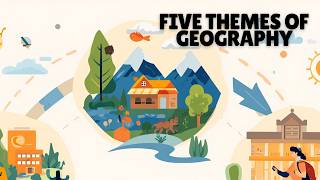
The 5 Themes Geography Worksheet is a versatile tool for teachers, homeschoolers, and students who want to explore the fundamental concepts of geography. By focusing on Location, Place, Human‑Environment Interaction, Movement, and Region, the worksheet helps learners connect abstract ideas to real‑world examples. Below is a comprehensive guide to creating, using, and adapting a 5‑themes worksheet for any grade level.
Why the 5 Themes Matter
Geographers use the five themes as a framework to organize spatial information. Each theme answers a different set of questions:
- Location – Where is something? (absolute and relative coordinates)
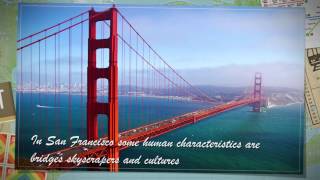
- Place – What are the physical and human characteristics of a location?
- Human‑Environment Interaction – How do people affect the environment, and how does the environment affect people?
- Movement – How and why do people, goods, and ideas travel?
- Region – How are areas grouped based on common traits?
When students engage with a worksheet that isolates each theme, they develop spatial thinking skills essential for AP Human Geography, middle‑school social studies, and beyond.
Key Components of an Effective Worksheet
A well‑designed 5 Themes Geography Worksheet includes the following elements:
- Clear Instructions – Brief directions that state the objective and the expected format (e.g., short answer, map labeling, or matching).
- Visual Prompts – Maps, photos, or diagrams that illustrate each theme. For example, a satellite image for “Place” or a transportation network for “Movement.”
- Real‑World Examples – Situations that students can relate to, such as a local park (Place) or a city’s public‑transit system (Movement).
- Assessment Rubric – A simple checklist that teachers can use to evaluate understanding quickly.
Sample Worksheet Layout
The following outline can be copied into a word processor or printed directly from a PDF:
- Section A – Location
- Provide the latitude and longitude of three major cities.
- Identify each city’s relative location using a neighboring state or country.
- Section B – Place
- Describe two physical characteristics (e.g., climate, landforms) of a chosen region.
- List three cultural traits (e.g., language, cuisine) of the same area.
- Section C – Human‑Environment Interaction
- Explain how a community adapts to a natural hazard (e.g., flood‑resistant housing).
- Assess the impact of a local industry on the environment.