Activities on Similar Triangles for GCSE Students
Understanding similar triangles is a cornerstone of the GCSE maths curriculum. When students can visualise and manipulate shapes, they develop the confidence to solve problems involving missing lengths, scale factors, and real‑world applications. Below is a collection of classroom‑ready activities that reinforce the concept of similar triangles while keeping learners aged 14 + engaged.
Why Similar Triangles Matter
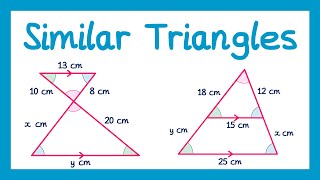
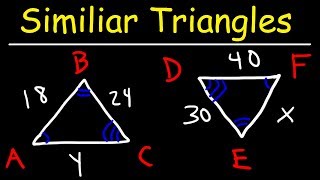
Similar triangles share the same shape but differ in size. Their corresponding angles are equal and the lengths of corresponding sides are proportional. This simple relationship lets pupils:
- Calculate unknown distances without measuring directly.
- Apply geometry to everyday contexts such as map reading, architecture, and photography.
- Develop algebraic reasoning by linking ratios to equations.
Mastering these ideas also prepares students for later qualifications, including A‑levels and the NEET 2026 paper, where geometry frequently appears.
Hands‑On Activities for GCSE Learners
The following activities blend visual, tactile, and analytical tasks. Each can be completed in a 45‑minute lesson or adapted for homework.
- Triangle Cut‑and‑Paste
- Provide printed triangles of different sizes.
- Ask students to cut them out, match corresponding angles, and arrange them to form larger similar figures.
- Students record the scale factor between each pair and verify side‑length ratios.
- Scale‑Factor Relay
- Divide the class into small teams.
- Each team receives a “base” triangle drawn on graph paper and a list of target scale factors (e.g., 1/2, 3, 5/4).
- Teams must draw the enlarged or reduced triangle, label all sides, and calculate missing lengths using proportion.
- Real‑World Photo Challenge
- Students bring a photograph that includes a clearly visible triangular object (a sign, a roof, a slice of pizza).
- Using a ruler and protractor, they measure one side and an angle, then apply the similarity principle to estimate another side that is not directly measurable.
- Results are shared, highlighting the practical value of similar triangles.
Step‑by‑Step Activity: Finding Missing Lengths
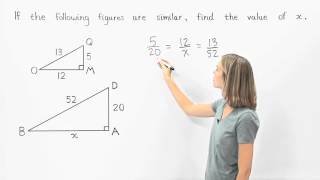
This activity mirrors the video tutorial by Shmoop, which explains how to find missing lengths in similar triangles. It is ideal for reinforcing the algebraic side of the topic.
- Set the Scene – Draw two triangles, ΔABC and ΔDEF, that are clearly similar (e.g., ∠A = ∠D, ∠B = ∠E,