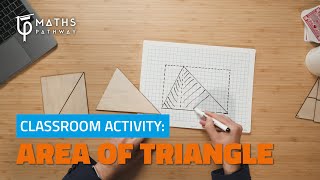
Engaging Activities on Triangles for Every Classroom
Triangles are the building blocks of geometry, and they offer endless possibilities for interactive learning. Whether you teach elementary students discovering basic shapes or high‑school learners exploring theorems, activities on triangles can make abstract concepts concrete, boost spatial reasoning, and spark curiosity. Below are a variety of hands‑on, digital, and outdoor activities that fit into any curriculum and keep students actively involved.
1. Hands‑On Manipulatives
Physical objects let students feel the properties of triangles. Try these simple yet effective tasks:
- Shape Sorting Stations: Provide a mix of cut‑out polygons. Ask students to group only the triangles, then sort them by side length (equilateral, isosceles, scalene). This reinforces classification skills.
- Triangle Construction Challenge: Give each group a set of sticks or straws and connectors. Challenge them to build a triangle with a specified perimeter or area. They must measure, adjust, and record their results.
- Angle Hunt: Using protractors, students locate and measure angles in classroom objects (e.g., the corners of a poster board). They record each angle and identify whether the shape forms a triangle.
2. Interactive Games and Puzzles
Games turn learning into play. The following activities are easy to set up and align with common standards.
- Triangle Bingo: Create bingo cards with different triangle descriptions (e.g., “3 equal sides,” “one right angle”). Call out clues; students cover matching triangles on their cards.
- Match‑the‑Theorem Memory: Prepare cards with statements of the Pythagorean theorem, triangle inequality, or interior‑angle sum. Pair each statement with a visual example. Students flip cards to find matching pairs.
- Digital Puzzle Apps: Websites like Math Antics offer free videos and interactive quizzes that reinforce triangle vocabulary and calculations.
3. Technology‑Enhanced Exploration
Integrating technology deepens understanding and provides instant feedback.
- Dynamic Geometry Software: Programs such as GeoGebra let students drag vertices to see how side lengths and angles change while the interior‑angle sum stays at 180°. Assign a task to prove this property by constructing multiple triangles.
- Virtual Reality (VR) Labs: If your school has VR headsets, guide students through a 3‑D world where they can walk inside a giant triangle, measure edges, and observe real‑time transformations.
- Online Video Lessons: Short, engaging clips (e.g., from RV Tutorials) explain concepts like “What is the sum of the interior angles of a triangle?” Students watch the video, then answer a quick exit ticket.
4. Outdoor Geometry Challenges
Taking learning outside adds movement and real‑world context.
- Triangle Treasure Hunt: Hide markers around the playground. Teams receive a list of triangle criteria (right, obtuse, equilateral). They locate markers that satisfy each condition and record coordinates.
- Human Triangle Formation: Students stand at three points on a field, forming a triangle with their bodies. They measure distances with measuring tapes and calculate the perimeter, reinforcing teamwork and measurement skills.
- Shadow Triangles: On a sunny day, have students place a stick upright and trace its shadow. By moving the stick, they create different triangular shadows and discuss how angle of elevation affects the shape.
5. Assessment Ideas Linked to Activities
Assessments should reflect the active nature of the lessons.
- Performance Rubrics: Evaluate students on accuracy of measurements, collaboration, and explanation of reasoning during hands‑on tasks.
- Exit Tickets: After a video or digital activity, ask a quick question such as “Why do all triangles have interior angles that add up to 180°?” This checks immediate comprehension.
- Reflective Journals: Have learners write a short paragraph describing how a specific activity helped them understand a triangle concept. This promotes metacognition.
6. Extending Learning with Real‑World Connections
Show students that triangles appear everywhere—from bridges and roofs to art and nature. Assign a project where learners photograph three real‑world triangles, label side lengths, and identify the type of triangle. They can present findings in a class gallery walk, reinforcing observation skills and vocabulary.
Conclusion
Incorporating a variety of activities on triangles keeps geometry lively and accessible. By blending manipulatives, games, technology, and outdoor challenges, teachers can address different learning styles while meeting curriculum standards. The key is to let students explore, measure, and discuss the properties of triangles in multiple contexts, turning a simple shape into a powerful learning experience.