Addition And Subtraction For First Graders: A Complete Guide
Learning to count, add, and subtract is a cornerstone of early mathematics. Parents, teachers, and caregivers often ask how to introduce these concepts in a way that feels natural and fun for young learners. This article provides a step‑by‑step framework that aligns with classroom standards and home‑based practice, making the transition from counting to basic operations smooth and confidence‑building for first‑grade students.
Why a Strong Foundation Matters
First graders are at a critical stage where concrete experiences shape abstract thinking. A great introduction to addition and subtraction helps children develop number sense, problem‑solving skills, and the ability to follow simple mathematical language. Research shows that early exposure to these operations improves later achievement in math, especially when the learning environment is supportive and interactive.
Educational Video Resources
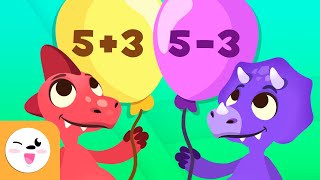
One of the most effective tools for visual learners is an educational video for children to learn how to manipulate numbers. Short, colorful clips that feature animated characters—such as the popular Numberblocks series—demonstrate how to combine groups of objects (addition) and how to take away objects (subtraction). These videos often include sing‑along songs, real‑time counting, and interactive pauses that invite the child to answer a question before the next step appears.
Let’s Learn Basic Addition
Begin with concrete objects like blocks, fruit, or beads. Follow these simple steps:
- Count the first set. Ask the child to count out, for example, three blocks.
- Add the second set. Place two more blocks beside the first group and count all five together.
- State the equation. Write “3 + 2 = 5” and say it aloud.
- Repeat with variations. Change the numbers and objects to keep the activity fresh.
Using everyday items makes the concept tangible, and the repetition reinforces the mental link between the symbols and the quantities they represent.
Introducing Subtraction Through Removal
Subtraction can be presented as “take away” or “how many are left?” The same objects used for addition work well for subtraction:
- Start with a full set. Lay out five beads.
- Remove a portion. Take away two beads.
- Count what remains. The child counts three beads left.
- Write the equation. “5 – 2 = 3” is recorded on a worksheet or whiteboard.
Repeating this process with different numbers helps children see that subtraction is simply the reverse of addition.
Center Grove Elementary’s Proven Approach
Center Grove Elementary, a school known for its balanced literacy‑math integration, follows a structured routine that blends direct instruction with hands‑on practice. Teachers start each math block with a brief “Number Talk,” where students verbally share strategies for solving simple addition or subtraction problems. This dialogue encourages critical thinking and prepares the class for the upcoming activity, whether it’s a worksheet, a game, or a collaborative problem‑solving session.