Welcome to Our Exploration of the Animal Kingdom
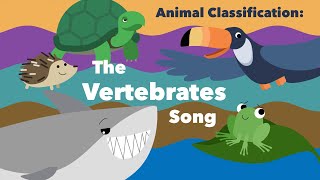
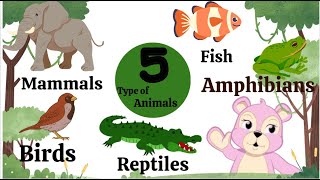
Understanding how scientists group animals helps kids see the connections between the creatures they love. The vertebrate world is neatly divided into five main classes: Amphibians, Birds, Fish, Mammals, and Reptiles. This article offers clear, kid‑friendly facts, a catchy animal song, and ideas for quizzes or videos that make learning fun.
The Five Vertebrate Classes
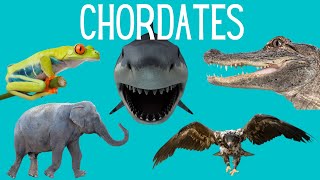
All vertebrates share a backbone, but each class has unique features that set it apart. Below is a quick reference you can use in the classroom, at home, or while watching an educational video for kids.
Fish
Fish are the earliest vertebrates to appear in the fossil record. They live primarily in water and breathe through gills. Most have scales, a streamlined body, and fins that help them swim.
- Key traits: gills, fins, cold‑blooded
- Examples: goldfish, salmon, shark
- Fun fact: Some fish, like the lungfish, can breathe air when water is scarce.
Amphibians
Amphibians spend part of their lives in water and part on land. They undergo metamorphosis—from a gilled larva to a lung‑breathing adult.
- Key traits: moist skin, dual life stages, cold‑blooded
- Examples: frogs, salamanders, newts
- Fun fact: A frog can absorb oxygen through its skin while underwater.
Reptiles
Reptiles are adapted to dry environments. Their scaly skin prevents water loss, and most lay shelled eggs on land.
- Key traits: dry, scaly skin; ectothermic; lay amniotic eggs
- Examples: turtles, snakes, crocodiles
- Fun fact: Some reptiles, such as the Komodo dragon, can detect prey from over a mile away.
Birds
Birds are the only vertebrates with feathers. Their lightweight skeletons and powerful flight muscles enable them to soar, dive, and migrate across continents.
- Key traits: feathers, beak, warm‑blooded