Base Ten Blocks Drawing: A Step‑by‑Step Guide for Teachers and Parents
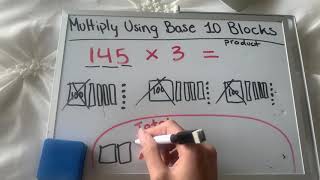
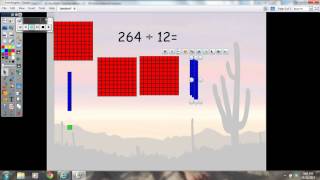
Base ten blocks are a classic visual tool for teaching place value, addition, and subtraction. When the physical manipulatives are not available, a well‑drawn representation can serve the same purpose. This article explains how to draw base ten blocks clearly, why the drawing method works, and how you can use it to model numbers within 1000.
Why Draw Base Ten Blocks Instead of Using the Actual Objects?
Physical blocks are great, but they can be costly, easy to lose, and cumbersome for large‑scale lessons. A drawing:
- Provides instant scalability—from single‑digit numbers to three‑digit numbers.
- Allows teachers to create custom worksheets quickly.
- Enables students to practice on paper, reinforcing the connection between symbols and quantities.
In many classrooms, a simple sketch on a whiteboard or a printable sheet is enough to spark understanding. The visual consistency of the blocks—units as squares, rods as long rectangles, flats as larger squares, and cubes as three‑dimensional forms—helps students transfer knowledge from the drawing to the actual manipulatives.
Materials Needed for a Clean Base Ten Blocks Drawing
- Plain paper or a digital drawing app.
- A ruler (if drawing by hand) or a grid template.
- Pencil or fine‑point pen for crisp lines.
- Optional: colored markers to differentiate units, rods, flats, and cubes.
Once you have the basics, you can follow the steps below to create accurate drawings.
Step‑by‑Step Instructions for Drawing Base Ten Blocks
- Draw the Unit Square. Start with a 1 cm × 1 cm square. This represents a single unit (1). Label it with the number “1” in the lower‑right corner if desired.
- Form the Rod (Ten). Place ten unit squares side by side, or simply draw a rectangle that is ten times the length of the unit square (10 cm × 1 cm). This rectangle stands for the value ten.
- Create the Flat (Hundred). Align ten rods horizontally to form a larger square (10 cm × 10 cm). This flat represents one hundred.
- Construct the Cube (Thousand). Stack ten flats in a three‑dimensional arrangement, or draw a larger square with a faint perspective line to suggest depth. The cube signifies one thousand.
- Label Each Block. Use bold or italic text inside the shapes to indicate their values (e.g., “10” for a rod). Clear labeling reduces confusion when students work with multiple blocks.
- Combine Blocks to Model Numbers.