Bonding Inquiry Activity: A Hands‑On Exploration of Chemical Bonds
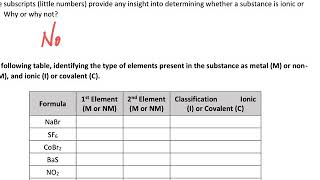
The Bonding Inquiry Activity is a structured, student‑centered investigation that helps learners visualize and understand how atoms connect to form molecules. By combining video walkthroughs, simple classroom models, and laboratory experiments, the activity covers ionic and covalent bonding, molecular geometry, and the role of polyatomic ions. Schools such as Wildwood IB World Magnet School have integrated this inquiry into their chemistry curriculum, providing a clear pathway from observation to conceptual mastery.
Why an Inquiry‑Based Approach?
Traditional lectures often present bonding concepts as abstract rules. An inquiry‑based activity encourages students to ask questions, make predictions, and test ideas through hands‑on work. This method aligns with the “atoms first” philosophy found in many modern textbooks, where the focus is on how electron interactions dictate the structure and properties of matter.
Overview of the Activity
The Bonding Inquiry Activity is typically divided into three phases:
- Phase 1 – Introduction and Video Walkthrough
- Phase 2 – Modeling Molecular Shapes
- Phase 3 – Laboratory Investigation of Ionic and Covalent Compounds
Phase 1: Introduction and Video Walkthrough
Students begin with a short presentation that defines key terms: ion, electron transfer, electron sharing, and polyatomic ion. The WS Bonding Inquiry Part 1 Video (created on October 11 2010 using FlipShare) serves as a visual guide, walking learners through the objectives, safety procedures, and the sequence of experiments they will perform.
Following the video, a brief discussion prompts students to identify the differences between ionic and covalent bonds and to predict how those differences might affect physical properties such as melting point, solubility, and electrical conductivity.
Phase 2: Modeling Molecular Shapes with Balloons
One of the most memorable parts of the inquiry uses balloons to model the VSEPR (Valence Shell Electron Pair Repulsion) theory. The concept—“molecules adopt a shape around the central atom so the electron pairs will be as far away as possible”—is illustrated by attaching balloons to a central hub. Each balloon represents an electron pair; the way they spread out mimics the geometry of real molecules.
Students construct models for common shapes:
- Linear (e.g., CO₂)
- Trigonal planar (e.g., BF₃)
- Tetrahedral (e.g., CH₄)
- Trigonal bipyramidal (e.g., PCl₅)
- Octahedral (e.g., SF₆)
After building each model, learners record the observed angles and compare them with textbook values, reinforcing the idea that electron‑pair repulsion dictates molecular geometry.
Phase 3: Laboratory Investigation of Ionic and Covalent Compounds
The laboratory segment draws on the Ionic and Covalent Bonding Lab Video, which demonstrates safe handling of reagents and proper data collection. Students work in small groups to explore the following experiments:
- Experiment A – Conductivity Test: Dissolve sodium chloride (ionic) and sugar (covalent) in water, then use a conductivity meter to show that only the ionic solution conducts electricity.
- Experiment B – Melting Point Observation: Heat samples of table salt and powdered sucrose, noting the stark contrast in melting temperatures.
- Experiment C – Solubility Comparison: Place equal masses of calcium carbonate (ionic) and methane (covalent) in water and record the amount that dissolves.
Data from these experiments are entered into a shared spreadsheet, where students create graphs that illustrate the trends. The activity concludes with a group discussion linking the observed properties to the type of bonding present.
Integrating Polyatomic Ions
While the primary focus is on simple ionic and covalent bonds, the inquiry also introduces polyatomic ions. An Overview of Polyatomic Ions handout lists common ions such as nitrate (NO₃⁻), sulfate (SO₄²⁻), and carbonate (CO₃²⁻). Students examine how these charged groups behave in ionic compounds, reinforcing the idea that a polyatomic ion can act as a single charged entity in a lattice.
To solidify understanding, learners write balanced chemical equations that involve polyatomic ions, for example:
NaNO₃ + AgCl → AgNO₃ + NaCl
This exercise demonstrates that the same principles governing simple ions also apply to more complex charged groups.
Assessment and Reflection
Assessment is woven throughout the activity. Teachers use the following tools:
- Pre‑ and post‑activity quizzes to measure conceptual growth.
- Lab notebooks evaluated for accuracy of observations and clarity of conclusions.
- Group presentations where each team explains how their balloon model predicts molecular shape and how their experimental data support the bonding type.
Reflection prompts ask students to consider questions such as:
- How does the transfer of electrons create a stable ionic lattice?
- Why do covalent molecules have lower melting points than many ionic compounds?
- In what ways does the VSEPR model help predict the shape of a molecule you have never seen?
Benefits for Teachers and Students
Implementing the Bonding Inquiry Activity offers several advantages:
- Engagement: The combination of videos, balloon models, and hands‑on labs keeps students actively involved.
- Conceptual Clarity: Visual and tactile representations make abstract ideas concrete.
- Skill Development: Students practice scientific methods, data analysis, and collaborative communication.
- Curriculum Alignment: The activity meets common core standards for high‑school chemistry and fits well within International Baccalaureate (IB) frameworks, as demonstrated by its use at Wildwood IB World Magnet School.
Getting Started
Teachers interested in adopting the Bonding Inquiry Activity can follow these steps:
- Gather the required videos (WS Bonding Inquiry Part 1 and Ionic and Covalent Bonding Lab) and ensure they are accessible to the class.
- Prepare balloon‑model kits (balloons, tape, a central hub such as a small ball or cork).
- Set up a basic chemistry lab with conductivity meters, heating plates, and safety equipment.
- Distribute the polyatomic‑ion overview handout and a worksheet that guides students through each phase.
- Schedule time for the three phases, allowing at least one class period for the video and discussion, one for modeling, and two for laboratory work.
Conclusion
The Bonding Inquiry Activity transforms the study of chemical bonds from a static lecture into an interactive exploration. By integrating video walkthroughs, balloon models that mimic VSEPR geometry, and hands‑on experiments that reveal the physical consequences of ionic and covalent bonding, students develop a deep, intuitive understanding of how atoms connect to form the world around them. Schools that have implemented the activity, such as Wildwood IB World Magnet School, report higher engagement and improved performance on assessments related to bonding concepts. With clear objectives, adaptable resources, and a focus on inquiry, this activity is a valuable addition to any high‑school chemistry program.