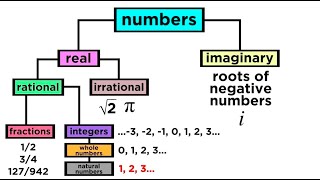
Chart of Rational and Irrational Numbers
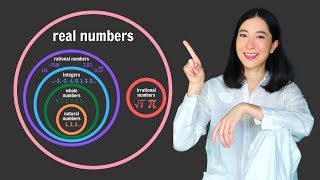
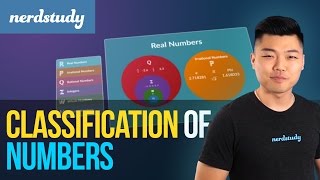
Understanding the distinction between rational and irrational numbers is a cornerstone of number theory. A rational number can be expressed as a fraction p/q where p and q are integers and q ≠ 0. Conversely, an irrational number cannot be written as a simple fraction; its decimal expansion is non‑terminating and non‑repeating. A chart that neatly separates these two categories helps students visualize the entire set of real numbers and see where each type fits.
Why Use a Chart?
- Clarity: A visual layout reduces confusion when comparing numbers.
- Memory aid: Placing examples next to their classification reinforces learning.
- Problem solving: Quickly identify whether a number is rational or irrational when solving equations.
Constructing the Chart
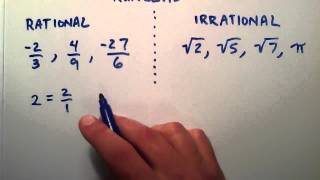
Below is a simple, text‑based representation of a chart that can be drawn on paper or in a spreadsheet. The chart is divided into two columns: one for rational numbers and one for irrational numbers.
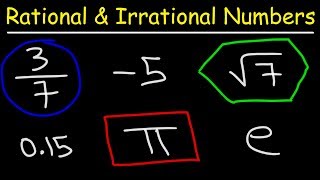
Rational Numbers
- Integers: -3, 0, 5
- Proper fractions: 1/2, 3/4, 7/10
- Repeating decimals: 0.333…, 2.142857…
- Finite decimals: 0.5, 4.75, 12.00
Irrational Numbers
- Square roots of non‑perfect squares: √2, √3, √5
- Cube roots of non‑perfect cubes: ∛2, ∛3
- Transcendental numbers: π, e
- Non‑repeating decimals: 0.1010010001…
How to Use the Chart in Practice
- Identify the form: Check if the number can be expressed as a fraction.
- Check decimal behavior: If it terminates or repeats, it is rational.
- Apply to equations: When solving for variables, knowing the nature of the constants speeds up simplification.
Examples of Common Misconceptions
- All fractions are irrational? No. Any fraction with integer numerator and denominator is rational.
- Zero is irrational? Zero is an integer and thus rational.
- All square roots are irrational? Only those of non‑perfect squares are irrational.
Expanding the Chart: Real Numbers vs. Imaginary Numbers
While this chart focuses on rational versus irrational, it also serves as a stepping stone to broader number sets. Real numbers include both rational and irrational numbers, whereas imaginary numbers involve