Components of the Milky Way Galaxy
Today we’re talking about our home galaxy, the Milky Way, and the distinct components that give it shape, mass, and life‑supporting environments. Understanding each part helps astronomers answer fundamental questions about galaxy formation, stellar evolution, and the dark matter that dominates the cosmos.
1. The Galactic Disk
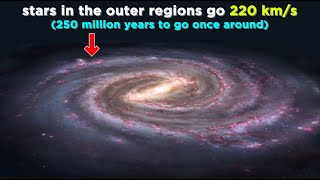
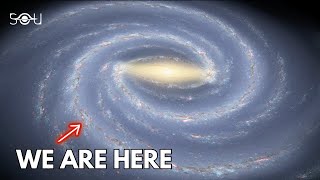
The thin, rotating disk is the most recognizable feature of the Milky Way. It contains the majority of the galaxy’s stars, gas, and dust, all confined to a relatively flat plane. This is the region where most of the spiral arms reside and where new stars are continuously born.
Stellar Population
Stars in the disk range from massive, short‑lived O‑type giants to older, sun‑like G‑type stars. The disk’s star‑forming regions are marked by bright nebulae such as the Orion Nebula and the Eagle Nebula.
Interstellar Medium (ISM)
The ISM is a mixture of hydrogen (both atomic and molecular), helium, heavier elements, and interstellar dust. It provides the raw material for star formation and is traced by radio emissions from neutral hydrogen (HI) and molecular clouds (CO).
2. The Central Bulge
At the heart of the Milky Way lies a dense, spheroidal bulge composed primarily of older, metal‑rich stars. The bulge extends roughly 2 kpc from the Galactic Center and hosts a complex mix of stellar orbits that differ from the orderly rotation of the disk.
Bar Structure
Observations show that the Milky Way’s bulge is not perfectly spherical but has a bar‑like shape. This bar channels gas toward the central regions, influencing star formation and feeding the supermassive black hole.
3. The Galactic Halo
Surrounding the disk and bulge is a diffuse, spherical halo that contains older, population II stars, globular clusters, and a significant amount of dark matter. The halo’s stars move in random, elliptical orbits, indicating a different formation history from the rotating disk.
Stellar Halo
These stars are typically metal‑poor, suggesting they formed early in the galaxy’s history or were accreted from dwarf galaxies that merged with the Milky Way.
Dark Matter Halo
Measurements of stellar velocities and the rotation curve reveal that the Milky Way’s visible mass accounts for only about 10 % of its total mass. The remaining mass is attributed to a massive dark matter halo that extends far beyond the visible edge of the galaxy.
4. The Central Supermassive Black Hole
At the precise center of the Milky Way sits Sagittarius A*, a