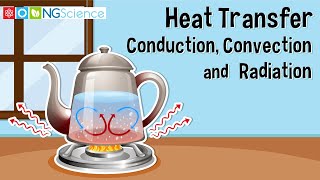
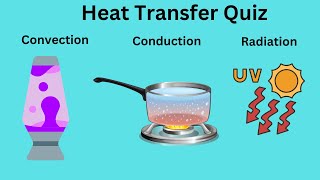
Conduction Radiation Convection Worksheet: A Complete Classroom Resource
Understanding how heat moves is a core part of any middle‑school or high‑school physics curriculum. The three major methods—conduction, convection, and radiation—are often introduced with videos, demonstrations, and textbook explanations. To reinforce that learning, teachers need a focused worksheet that challenges students to apply concepts, solve problems, and reflect on real‑world examples. This article presents a ready‑to‑use Conduction Radiation Convection Worksheet, complete with activity ideas, answer keys, and tips for aligning the material with NGSS energy‑transfer standards.
Why a Dedicated Worksheet Matters
Heat is the transfer of energy from objects of different temperatures. While a video tutorial can explain the difference between the three modes, a worksheet lets students:
- Identify each mode in everyday situations.
- Calculate heat flow using simple formulas.
- Compare the efficiency of each method.
- Develop scientific explanations in written form.
These skills deepen conceptual understanding and prepare learners for higher‑order questions on assessments.
Worksheet Overview
The worksheet is organized into four sections. Each section targets a specific learning objective and can be printed on a single A4 sheet (or used digitally).
- Definitions & Diagrams – Match terms to pictures and write concise definitions.
- Conceptual Questions – Multiple‑choice and short‑answer items that test comprehension.
- Quantitative Problems – Simple calculations involving thermal conductivity, temperature gradients, and heat flux.
- Real‑World Applications – Open‑ended prompts that ask students to describe heat transfer in cooking, building design, or clothing.
Sample Worksheet Content (Excerpt)
Section 1: Definitions & Diagrams
- Draw arrows to show the direction of heat flow in each diagram.
- Write a one‑sentence definition for conduction, convection, and radiation.
Section 2: Conceptual Questions
- Which method transfers heat through a vacuum?
Answer: Radiation - When a metal spoon becomes hot after being left in a pot of soup, which heat‑transfer mode is primary?
Answer: Conduction - Warm air rising from a heater illustrates which process?
Answer: Convection
Section 3: Quantitative Problems
- Calculate the heat transferred through a copper rod 0.5 m long with a cross‑sectional area of 1 cm², a temperature difference of 80 °C, and a thermal conductivity of 400 W·m⁻¹·K⁻¹.
Solution: Q = k·A·ΔT/L = 400 × 1×10⁻⁴ × 80