Congo Democratic Republic Vs Congo Republic: Understanding the Two Nations
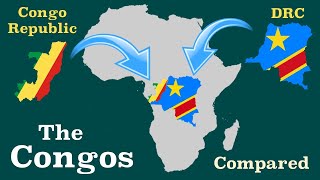
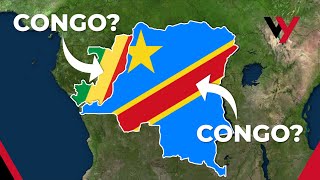
The phrase “Congo Democratic Republic Vs Congo Republic” often appears in travel guides, news reports, and online quizzes. While the two countries share a name and a border, they are distinct in history, politics, geography, and culture. This article breaks down the key differences to help readers grasp why there are two Congos and what each nation offers.
Why Are There Two Congos?
The name “Congo” originates from the Congo River, one of Africa’s longest waterways. During the colonial era, European powers divided the river basin into separate territories. The area now known as the Democratic Republic of the Congo (DRC) was first claimed by Belgium, while the neighboring region became a French protectorate that later turned into the Republic of the Congo. After independence in the 1960s, both states retained the “Congo” identifier, leading to the common confusion.
Geography and Capitals
- Democratic Republic of the Congo (DRC) – The larger of the two, it spans more than 2.3 million square kilometers, making it the second‑largest country in Africa. Its capital is Kinshasa, situated on the south bank of the Congo River opposite Brazzaville.
- Republic of the Congo – Covering about 342,000 square kilometers, it is roughly one‑seventh the size of the DRC. The capital city is Brazzaville, directly across the river from Kinshasa.
The proximity of Kinshasa and Brazzaville is unique: they are the world’s closest national capitals, separated only by the river’s width of about 4 kilometers.
Political Systems
Both nations are republics, but their governmental structures differ markedly.
- Democratic Republic of the Congo – A semi‑presidential system with a president who shares executive power with a prime minister. The country has experienced periods of conflict and political transition, influencing its current governance.
- Republic of the Congo – Operates under a presidential republic model. The president holds significant authority, and the country has enjoyed relatively stable political continuity since the early 2000s.
Economic Profiles
Resources shape the economies of both Congos, yet the scale and diversification vary.
- DRC – Rich in minerals such as copper, cobalt, diamonds, and gold. Mining accounts for a large share of GDP, but the country also faces challenges in infrastructure and governance that affect economic growth.
- Republic of the Congo – Relies heavily on oil production, which contributes the majority of export revenue. Efforts are underway to diversify into agriculture and tourism to reduce dependence on hydrocarbons.
Cultural Highlights
Both nations share linguistic roots, with French as the official language, but they boast distinct