Understanding the Two Congos: DRC vs. Congo Brazzaville
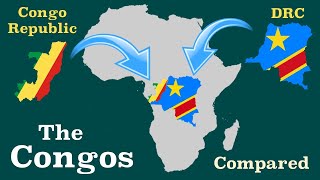
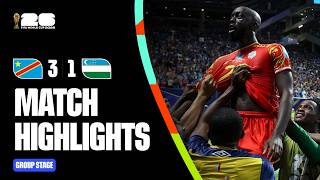
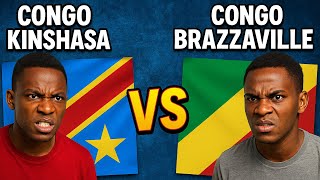
The central African region is home to two neighboring nations that often cause confusion: the Democratic Republic of the Congo (DRC), also known as Congo‑Kinshasa, and the Republic of the Congo, commonly called Congo‑Brazzaville. Though they share a name and a river border, their histories, political systems, economies, and cultural identities differ markedly. This article compares the two countries across key dimensions, helping readers grasp why the rivalry—especially on the football field—has become one of the continent’s most celebrated derbies.
Geography and Demographics
Both states lie on the banks of the Congo River, but the DRC is the second‑largest country in Africa, covering about 2.34 million km², while Congo Brazzaville occupies roughly 342 000 km². Consequently, the DRC’s population exceeds 100 million people, making it the most populous Francophone nation on the continent. In contrast, Congo Brazzaville has a population of around 5.5 million.
- Capital cities: Kinshasa (DRC) and Brazzaville, situated directly across the river from each other.
- Official languages: French is the administrative language in both, but the DRC also recognises four national languages—Lingala, Swahili, Kikongo, and Tshiluba—reflecting its ethnic diversity.
- Climate: Both experience tropical rainforest climates in the south, transitioning to savanna in the north, though the DRC’s size creates greater climatic variation.
Historical Roots of the Split
The modern border dates back to the late 19th century “Scramble for Africa.” King Leopold II of Belgium claimed the vast interior region as the Congo Free State, later becoming the Belgian Congo (today’s DRC). Meanwhile, France established a protectorate over the smaller coastal territory that became French Congo, later the Republic of the Congo. Independence came at different times: Brazzaville in 1960 and Kinshasa in 1960 as well, but the DRC’s post‑colonial trajectory was far more turbulent.
Political Systems and Governance
Both nations are republics with presidents, yet their political stability diverges sharply.
- DRC: Since independence, the DRC has endured coups, civil wars, and long‑term authoritarian rule. The current constitution provides for a semi‑presidential system, but elections are often contested, and governance challenges persist.
- Congo Brazzaville: The Republic of the Congo has experienced periods of single‑party rule and military coups, but it has maintained relatively smoother transitions in recent decades, with a presidential system that concentrates power in the executive.