Congo Vs Republic Of Congo: Understanding the Two Neighboring Nations
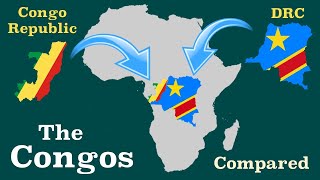
The central African region is home to two distinct countries that often cause confusion: the Democratic Republic of the Congo (commonly called “Congo”) and the Republic of the Congo. While they share a name and a border along the Congo River, their histories, political systems, economies, and demographics differ markedly. This article breaks down the key contrasts to help readers grasp the nuances of Congo Vs Republic Of Congo.
Geography and Location
Both nations sit on opposite banks of the Congo River, but their territories vary in size, climate, and natural resources.
Democratic Republic of the Congo (DRC)
- Area: Approximately 2.34 million km², making it the second‑largest country in Africa.
- Landscape: Vast tropical rainforests, savannas, and the Albertine Rift mountain range.
- Key Rivers: Congo River, Lualaba, Kasai.
Republic of the Congo (RoC)
- Area: About 342 000 km², roughly one‑seventh the size of its larger neighbor.
- Landscape: Coastal lowlands, dense inland rainforests, and the Plateaux region.
- Key Rivers: Congo River (forms the border), Kouilou, Nyanga.
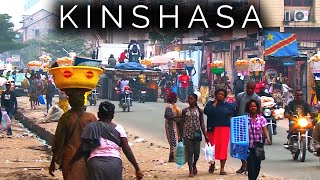
The two capitals—Kinshasa (DRC) and Brazzaville (RoC)—are the world’s closest pair of national capitals, separated only by the river’s width.
Historical Background
The story of Congo Vs Republic Of Congo begins with European colonisation.
Colonial Roots
- DRC: Formerly the Belgian Congo, it was administered by Belgium from 1885 until independence in 1960.
- RoC: Known as French Congo, it was part of French Equatorial Africa until gaining independence in 1960 as well.
Both countries emerged from the scramble for Africa, but their colonial powers left distinct political legacies. Belgium’s extractive focus fostered a centralized state with vast mineral wealth, while France promoted a more limited administrative structure.
Post‑Independence Turmoil
After 1960, the DRC experienced a series of coups, civil wars, and the long rule of Mobutu Sese Seko, whose regime lasted over three decades. The Republic of the Congo, though also marked by coups, enjoyed relatively shorter periods of instability and has alternated between socialist and multi‑party governments.
Political Systems
Today, both nations operate as republic