Convert Lpm Into m³ /hr: A Complete Guide
When working with water, chemicals, or steam in industrial processes, the ability to switch between flow‑rate units is essential. One common request is converting litres per minute (Lpm) to cubic metres per hour (m³ /hr). This article explains the relationship between these units, provides a clear conversion formula, and walks you through a step‑by‑step example.
Why Unit Conversion Matters
Accurate flow‑rate calculations affect:
- Equipment sizing for pumps and pipes
- Energy consumption estimates in power plants
- Regulatory compliance for water‑use reporting
Using the wrong unit can lead to oversized equipment, wasted energy, or costly redesigns. Therefore, mastering the Lpm → m³ /hr conversion is a valuable skill for engineers, technicians, and plant operators.
Understanding the Units
Lpm – litres per minute, a metric unit that measures how many litres of fluid pass a point each minute. It is often used in laboratory settings and small‑scale water‑treatment systems.
m³ /hr – cubic metres per hour, the standard unit for larger‑scale industrial flow rates. One cubic metre equals 1,000 litres, and one hour equals 60 minutes.
Because both units are based on the metric system, the conversion is a simple matter of scaling by the appropriate factors of 1,000 and 60.
Conversion Formula
The direct relationship can be expressed as:
- Convert litres to cubic metres: 1 m³ = 1,000 L.
- Convert minutes to hours: 1 hr = 60 min.
Combining these steps yields the formula:
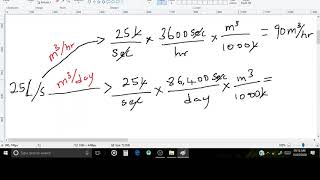
m³ /hr = (Lpm × 60) ÷ 1,000
Or, more concisely:
m³ /hr = Lpm × 0.06
Step‑by‑Step Example
Suppose a cooling system delivers 350 Lpm. To find the equivalent flow rate in m³ /hr:
- Multiply by the minutes‑to‑hours factor: 350 × 60 = 21,000 L / hr.
- Divide by 1,000 to change litres to cubic metres: 21,000 ÷ 1,000 = 21 m³ /hr.
The result shows that 350 Lpm equals 21 m³ /hr. This conversion can be repeated for any Lpm value by