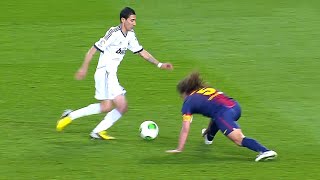
Ángel Di María at Real Madrid: Defining a Fluid Attacking Role
Ángel Di María's tenure at Real Madrid from 2010 to 2014 remains one of the most dynamic and impactful periods in the club's modern history. While his time in the Spanish capital produced spectacular moments, the question of his precise position on the pitch often sparked debate. Di María was never a one-dimensional player; his role evolved significantly under different managers, showcasing a versatility that made him an indispensable asset. To understand his position at Real Madrid is to appreciate a player who could dictate a game from the flank, the center, or anywhere in between.
The Argentine Arrives: A Winger by Origin
When Real Madrid signed Di María from Benfica for a reported €25 million in the summer of 2010, he was immediately cast as a traditional winger. His early days under José Mourinho saw him deployed primarily on the right flank. In this position, Di María utilized his blistering pace, low center of gravity, and exceptional dribbling ability to take on full-backs. His left-footed preference from the right wing made him a constant threat to cut inside onto his stronger foot, a move that created space for overlapping runs from the full-back or shooting opportunities. In this phase, his role was clear: stretch defenses, provide width, and deliver dangerous crosses into the box.
Natural Headings: The Left Wing Shift
As his first season progressed, Di María demonstrated equal proficiency on the left wing. His ambidexterity—despite being a natural lefty—allowed him to operate comfortably on either side. On the left, he would often drive towards the byline to deliver whipped crosses