Difference Between Nederland and Netherlands
When discussing the low-lying country in Western Europe known for windmills, tulips, and innovative water management, people often use three different terms: Nederland, the Netherlands, and Holland. While these words are frequently used interchangeably in casual conversation, they have distinct meanings rooted in language, geography, and political history.
What is Nederland?
Nederland is simply the endonym for the country. An endonym is the name used by the people who live in a particular place in their own native language. In Dutch, the name of the country is Nederland.
The word literally translates to "low land," which is a factual description of the region's geography. A significant portion of the country is situated at or below sea level, necessitating the complex system of dikes and polders that the nation is famous for. When a local refers to their home in their own tongue, they are referring to Nederland.
What are the Netherlands?
The Netherlands is the English translation of Nederland. It is the official name of the sovereign state used in international diplomacy, passports, and official government documentation.
Grammatically, the use of the definite article "the" is important. Because the name refers to a collection of "low lands," it is treated as a plural noun in a geographical sense, though it functions as a single political entity. Whether you are booking a flight or reading a geopolitical report, "the Netherlands" is the correct term for the entire country.
The Common Misconception: What is Holland?
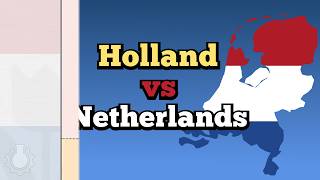
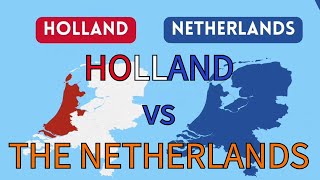
Perhaps the most common point of confusion is the use of the word Holland. Many people use "Holland" as a synonym for the entire country, but geographically, this is incorrect.
The Geography of Holland
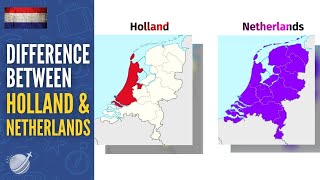
Holland actually refers to a specific region within the Netherlands. Historically, the area was divided into two provinces:
- North Holland (Noord-Holland): The province containing the capital city, Amsterdam.
- South Holland (Zuid-Holland): The province containing the seat of government, The Hague, and the city of Rotterdam.
These two provinces have historically been the most populous and economically powerful regions of the country. Because they were the primary hubs for trade and international contact during the Dutch Golden Age, foreign merchants and diplomats began referring to the entire region as "Holland." Over time, this shorthand leaked into the global lexicon, leading many to believe that the country itself is called Holland.
Summary of Key Differences
To keep these terms straight, it helps to categorize them by their function:
- Nederland: The name of the country in the Dutch language.
- The Netherlands: The official name of the country in English.
- Holland: A specific region (comprising two provinces) within the country.
Why Does the Distinction Matter?
While most people will understand what you mean if you say "I am visiting Holland," using the term to describe the entire country can be seen as imprecise. For residents of provinces like Friesland, Limburg, or Overijssel, being called a "Hollander" is technically inaccurate, as they live in the Netherlands but not in the region of Holland.
In recent years, the Dutch government has made efforts to move away from the branding of "Holland" in official tourism and diplomatic contexts. By emphasizing "The Netherlands," the state aims to provide a more inclusive representation of all twelve provinces, rather than focusing solely on the economic powerhouses of the west.
Conclusion
Understanding the difference between Nederland, the Netherlands, and Holland is a lesson in both linguistics and geography. While Nederland is the native name and the Netherlands is the English equivalent, Holland is a regional designation. By using these terms correctly