Understanding the Displacement and Distance Worksheet
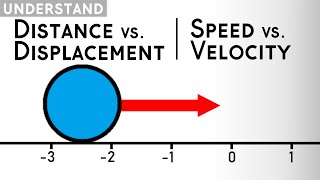
In physics education, a displacement and distance worksheet is a practical tool that helps learners differentiate between two fundamental concepts of motion. While distance measures the total ground covered, displacement describes the straight‑line change in position from start to finish, including direction. This distinction is essential for solving problems in kinematics, engineering, and everyday life.
Why a Worksheet Is Useful
Worksheets provide structured practice that reinforces theory through active problem solving. When students repeatedly calculate distance and displacement, they develop intuition for:
- Identifying the path taken versus the net change in position.
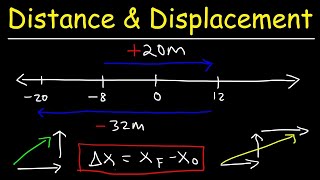
- Using a one‑dimensional number line to visualize and calculate motion.
- Applying sign conventions correctly for direction.
Teachers also benefit from worksheets because they offer a quick way to assess understanding and spot common misconceptions.
Key Concepts Covered in a Displacement and Distance Worksheet
Distance
Distance is a scalar quantity. It is always positive and equals the sum of the lengths of all segments traveled, regardless of direction.
Displacement
Displacement is a vector quantity. It has both magnitude and direction and is calculated as the straight‑line distance between the initial and final positions. In one‑dimensional motion, displacement can be positive, negative, or zero, depending on the chosen reference direction.
Calculating
Both distance and displacement are calculated using simple arithmetic, but the process differs:
- Identify each segment of the path. Write down the length and direction (e.g., +5 m, –3 m).
- Calculate distance. Add the absolute values of all segments: Distance = |5| + |3| = 8 m.
- Calculate displacement. Sum the signed values: Displacement = +5 m + (–3 m) = +2 m.
Worked Example from a Video Resource
This video is a worked example on a typical worksheet problem. The physics video provides a basic introduction into motion along a straight line, showing how to plot points on a number line and then compute distance and displacement.
Problem statement: A student walks 4 m east, then 6 m west, and finally 2 m east. Determine the total distance traveled and the net displacement.
Solution using a one-dimensional number line to visualize and calculate:
- Start at the origin (0 m).
- Move +4 m (east) →