Elapsed Time on a Number Line: A Simple, Effective Strategy
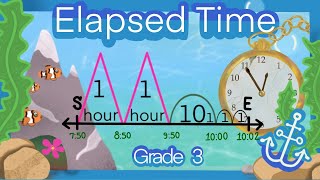
Understanding how long something lasts is a skill that helps students solve real‑world problems—from planning a trip to predicting when a plane will take off. Lacey OLeary’s number‑line approach turns time calculations into a visual, step‑by‑step activity that students can master quickly. In this article you’ll learn how to use a number line to find elapsed time, see the method in action with a pilot’s schedule and a road trip, and discover an animated video that brings the concept to life.
Why a Number Line Works for Time
A number line is a straight line marked with evenly spaced numbers. When the numbers represent minutes or hours, the distance between two points tells you exactly how many units separate them. This visual cue makes it easy to avoid common pitfalls, such as adding minutes that cross an hour boundary or forgetting to account for a time zone shift. The number‑line method also encourages students to think in terms of “before” and “after,” reinforcing sequencing skills.
Step‑by‑Step Method by Lacey OLeary
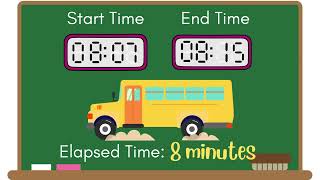
- Identify Start and End Times. Write down the time the event begins and the time it ends. Make sure both times are in the same format (e.g., 14:00 and 16:45).
- Plot the Points. Draw a horizontal line and mark the start time on the left. Extend the line to the right and mark the end time. Keep the spacing consistent—each unit might represent one hour or one half‑hour, depending on the problem.
- Measure the Distance. Count the number of units between the two points. This count is the elapsed time in the units you chose