Flow Rate Conversion M3 Hr To Lpm – A Practical Guide
When engineers, plant operators, or hobbyists talk about water flow, the most common units you will hear are cubic meters per hour (m³/hr) and liters per minute (Lpm). Converting between these units is a routine task in power‑plant discussions, HVAC design, and any application that involves volumetric flow measurement. This article explains the conversion step‑by‑step, provides quick reference tables, and highlights typical use cases.
Understanding the Units
What is m³/hr?
The unit cubic meter per hour measures the volume of fluid that passes a point in a system every hour. It is widely used in large‑scale processes such as cooling‑tower circulation, boiler feedwater, and industrial pipelines.
What is Lpm?
Liters per minute is a smaller‑scale unit that expresses how many liters flow each minute. It is common in domestic water supply, laboratory equipment, and portable pumps.
Why the conversion matters
Many manufacturers specify pump curves in Lpm, while plant specifications may be written in m³/hr. A clear conversion avoids sizing errors, reduces energy waste, and ensures compliance with safety standards.
Conversion Formula
The relationship between the two units is based on the metric system:
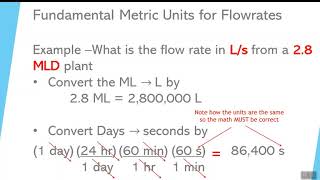
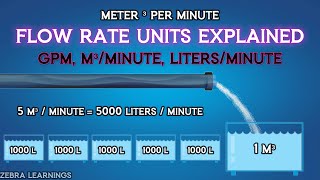
- 1 m³ = 1 000 L
- 1 hour = 60 minutes
Therefore, the conversion factor is:
1 m³/hr = (1 000 L) ÷ (60 min) = 16.6667 Lpm
Conversely:
1 Lpm = 0.06 m³/hr
Step‑by‑Step Conversion Example
- Identify the flow rate in m³/hr. Example: a cooling‑tower pump delivers 3.5 m³/hr.
- Multiply by the conversion factor 16.6667.
3.5 m³/hr × 16.6667 = 58.33 Lpm. - Round as appropriate. For most engineering reports, two decimal places are sufficient, so the flow is 58.33 Lpm.
If you start with Lpm, simply multiply by 0.06. For instance, a laboratory pump rated at 120 Lpm corresponds to 120 × 0.06 = 7.2 m³/hr.