Understanding “Full” and “Empty” in Early Mathematics
Teaching the concepts of full and empty is a foundational step in developing a child’s sense of capacity, measurement, and logical reasoning. These ideas appear in everyday life—whether a basket is overflowing with berries or a cup is waiting to be filled. By linking concrete experiences with simple songs and interactive activities, educators can turn abstract vocabulary into tangible knowledge.
Why “Full” and “Empty” Matter
Children as young as three years old begin to notice when a container is full or empty. Recognizing these states helps them:
- Develop spatial awareness and visual discrimination.
- Learn basic measurement language such as “more,” “less,” “half,” and “all.”li>
- Build problem‑solving skills through sorting and filling tasks.
When learners can confidently identify a full or empty container, they are better prepared for later concepts like volume, capacity, and fractions.
Connecting Storytelling with Real‑World Observation
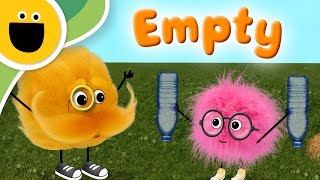
One engaging scenario involves two characters, Lili and Toro, who are picking berries in a garden. While they gather fruit, the third character, Torto, watches his basket stay still. This simple narrative illustrates the contrast between a full basket (Lili’s) and an empty one (Torto’s). Children can reenact the scene, placing objects in a container until it cannot hold any more, then emptying it again.
Music‑Based Learning: A Simple Maths Song
Music reinforces memory. A short, catchy song that introduces capacity vocabulary can be played during circle time or a classroom routine. The lyrics might go:
- “When the cup is full, we say ‘full!’”
- “When the cup is empty, we say ‘empty!’”
- “Fill it up, pour it out, see the change, no doubt!”
Parents and teachers can stream the tune on Spotify, Apple Music, and all major platforms. The rhythm helps younger learners internalize the words while practicing the actions of filling and emptying.
Full and Empty Activity Guide
The following activity sequence is designed for a LKG (Lower Kindergarten) maths video or classroom session.