How To Find Gradient: A Step‑by‑Step Guide
Finding the gradient (or slope) of a straight‑line graph is a fundamental skill in algebra and geometry. Whether you are preparing for a grade‑9 exam or tackling a real‑world problem, understanding how to calculate gradient helps you interpret relationships between variables quickly and accurately.
What Is Gradient?
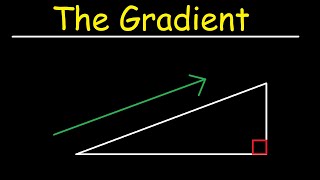
The gradient of a straight line measures its steepness. In mathematical terms, it is the ratio of the vertical change (rise) to the horizontal change (run) between any two points on the line. A positive gradient indicates an upward‑sloping line, a negative gradient a downward‑sloping line, and a gradient of zero represents a horizontal line.
Why Gradient Matters
- Predict outcomes: In science and economics, the gradient shows how one variable changes in response to another.
- Identify trends: A steeper gradient means a faster change, which is useful when comparing data sets.
- Solve equations: Many exam questions require you to rearrange linear equations, and knowing the gradient simplifies this process.
Basic Formula for Gradient
The standard formula is:
Gradient (m) = (y₂ – y₁) / (x₂ – x₁)
Here, (x₁, y₁) and (x₂, y₂) are any two distinct points on the line. The order of the points does not affect the result, as long as the same order is used for both the numerator and denominator.
Step‑by‑Step Procedure
- Select two clear points: Choose points that are easy to read from the graph, preferably where the line crosses grid intersections.
- Record coordinates: Write down the x‑ and y‑values for each point. For example, point A (2, 5) and point B (6, 13).
- Calculate the rise: Subtract the y‑coordinate of the first point from the y‑coordinate of the second point. In the example, rise = 13 – 5 = 8.
- Calculate the run: Subtract the x‑coordinate of the first point from the x‑coordinate of the second point. In the example, run = 6 – 2 = 4.
- Divide rise by run: Gradient = 8 / 4 = 2. This means the line rises 2 units for every 1 unit it runs horizontally.
- Check your work: If the line is drawn accurately, using any other pair of points should give the same gradient.
Common Pitfalls and How to Avoid Them
- Mixing up coordinates: Always keep the x‑values together and the y‑values together when subtracting.