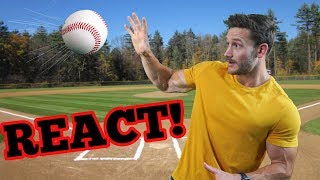
How To Improve Your Reflexes Reaction Time: A Practical Guide
Reflexes and reaction time are essential for athletes, gamers, drivers, and anyone who wants to respond quickly to unexpected situations. This article breaks down proven techniques—eye‑brain training, sport‑specific drills, and lifestyle tweaks—to help you get faster without relying on gimmicks.
Understanding Reaction Time
Reaction time is the interval between a stimulus (visual, auditory, or tactile) and the corresponding motor response. It consists of three components:
- Stimulus detection – how quickly your senses notice the event.
- Neural processing – the brain’s speed in interpreting the signal.
- Motor execution – the time it takes your muscles to act.
Improving any of these stages can shave milliseconds off your overall response, which is often enough to outperform a competitor.
Eye‑Brain Training Exercises
Because visual cues dominate most real‑world reactions, training the eye‑brain connection is a solid starting point.
1. Focus Shifts
Place two objects 6‑10 feet apart. Alternate your gaze between them every 2‑3 seconds for 5 minutes. This exercise enhances accommodation speed, a key factor in quickly refocusing during fast‑moving activities.
2. Peripheral Awareness Drills
Stand in a comfortable stance and have a partner hold a small ball at arm’s length. While you focus on a fixed point ahead, ask the partner to toss the ball from the side. React by catching or deflecting it. Repeating this 10‑15 times improves peripheral detection and reduces the “blind spot” delay.
3. Rapid Pattern Recognition
Use a deck of cards or a digital app that flashes random shapes for 200‑300 ms. Your task is to call out the shape or suit as fast as possible. Over 10 minutes, you train the brain to process visual information under time pressure.
Sport‑Specific Drills: Boxing and Tennis Ball Workouts
When you want to apply improvements to a real sport, use drills that mimic the timing and movement patterns you’ll face.
Boxing: The “Mirror Punch” Drill
- Partner A throws light punches while Partner B mirrors each strike.
- Focus on the opponent’s shoulders and eyes to anticipate the punch direction.
- Switch roles after 2 minutes; repeat for 4 sets.
This drill sharpens visual cue recognition and trains the neuromuscular system to fire in under 150 ms—typical for a well‑conditioned boxer.
Tennis Ball Reaction Drill
- Hang a tennis ball from a ceiling hook so it swings like a pendulum.
- Stand side‑on,