Understanding Brown in Watercolor
Brown is not a single pigment; it is a blend of primary and secondary colors that can be adjusted in tone, temperature, and value. In watercolor, the perceived darkness of brown depends on three main factors:
- Pigment load – the amount of dry pigment mixed into the wash.
- Transparency – most watercolor pigments are semi‑transparent, so the paper’s whiteness influences the final color.
- Complementary hues – adding a small amount of a color opposite brown on the color wheel can deepen its richness.
Because watercolor pigments are naturally luminous, a brown that looks “muddy” or “dark” on the palette may appear lighter once applied. Knowing how to control these variables is the first step toward mastering a darker brown.
Preparing a Limited Transparent Staining Palette
You can start with a simple palette of four transparent stains:
- Burnt Sienna (warm earth)
- Raw Umber (cool earth)
- Yellow Ochre (golden yellow)
- Alizarin Crimson (deep red)
These colors mix well together and stay transparent, allowing you to build depth through layering rather than relying on opaque pigments.
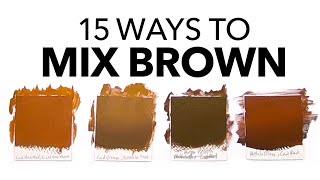
Mixing browns isn’t hard! No, you won’t need a full box of colors to achieve a dark, sophisticated brown. Begin with equal parts Burnt Sienna and Raw Umber, then adjust the value with the following techniques.
Technique 1 – Increase Pigment Load
Adding more dry pigment to the mix makes the wash less transparent and therefore darker. To maintain a workable consistency, follow these steps:
- Place a small amount of the brown mixture on a palette.
- Gradually sprinkle additional pigment while stirring with a clean brush.
- Test the color on a scrap of paper; if it still appears too light, repeat the process.
Remember that too much pigment can cause granulation, so aim for a smooth, even texture.
Technique 2 – Layer Transparent Washes
Because watercolor is inherently luminous, building color in layers is often more effective than trying to make a single, opaque wash. Here’s how to darken brown through