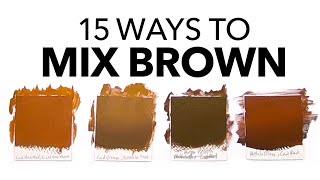
Why Make Your Own Brown?
While many artists reach for a pre-mixed brown tube, creating your own brown with acrylics offers greater control and versatility. Brown is not a single color but a family of hues, each with unique undertones. By mixing your own, you can achieve warm, earthy tones or cool, muted shades tailored to your project. This flexibility is essential for realistic portraits, landscapes, or abstract compositions.
The Basics of Color Mixing
Acrylic paint mixing follows the principles of color theory. Brown is a secondary or tertiary color formed by blending primary colors (red, blue, yellow) or mixing complementary hues. The key is understanding how ratios and color choices affect the final result. Always start with small amounts on your palette to test combinations before committing to large areas.
Mixing Warm Browns: Red and Yellow
The most straightforward way to create brown is by combining a red and a yellow. For example:
- Red + Yellow = Orange
- Orange + Blue = Brown
Start with a small amount of red and yellow on your palette. Mix them thoroughly to form orange. Gradually add a touch of blue until you achieve the desired brown. The closer the blue is to purple, the cooler your brown will be. Adjust ratios to create deeper or lighter tones.
Creating Cool Browns: Blue and Red
For a cooler brown, mix blue with a red that leans toward purple, such as magenta. When blue and red combine, they form purple. Adding a small amount of yellow to this purple creates a