How To Make Brown Using Food Coloring: A Step‑by‑Step Guide
Brown is one of the most versatile shades in cake decorating, fondant art, and chocolate‑themed projects. Whether you need a chocolate brown colour for a birthday cake or a deep cocoa tone for a fondant figure, the same basic principles apply. This article explains how to create reliable brown tones using only liquid food coloring, so you can achieve consistent results every time.
Why Food Coloring Works for Brown
Food coloring is a water‑based pigment that mixes like paint. When two complementary colors are combined—such as red and green, or blue and orange—their wavelengths cancel each other out, producing a neutral tone. Adding a small amount of a third hue fine‑tunes the result. Understanding this colour theory helps you avoid trial‑and‑error and creates a repeatable method for any kitchen.
Essential Tools and Ingredients
- Liquid food coloring (red, blue, yellow, green, orange, and black are most useful)
- A small mixing bowl or cup
- A clean spoon or whisk
- Measuring spoons or a dropper for precision
- Base medium (white fondant, buttercream, or icing)
Basic Colour‑Mixing Formula
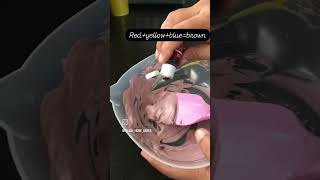
The simplest way to achieve a neutral brown is to start with the three primary colours—red, blue, and yellow—in equal parts. This creates a muddy orange that can be darkened or lightened as needed.
- Start with a small amount of each primary colour. For example, add 2 drops of red, 2 drops of blue, and 2 drops of yellow to your mixing bowl.
- Stir thoroughly. The mixture will appear a dark gray‑brown.
- Adjust the hue. If the colour leans too purple, add a few more drops of yellow. If it looks too orange, add a drop of blue.
- Darken the shade. For a richer chocolate brown, add a tiny amount of black or a deeper red.
- Test on a sample. Dip a small piece of fondant or a buttercream spoon into the mixture to see the final colour after it sets.
Advanced Tricks for Specific Shades
Different projects call for distinct brown tones. Below are three common variations and the colour‑mixing tricks that create them.
1. Chocolate Brown (Deep, Warm)- Start with the basic brown formula.
- Add 1–2 drops of black to deepen the colour.
- Finish with 1