How To Make Brown Using Primary Colors
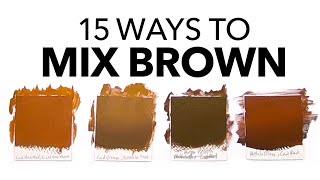
Brown is one of the most versatile colors in art, appearing in everything from natural landscapes to everyday objects. By mastering how to create brown from the three primary colors—red, blue, and yellow—you can craft a wide range of earthy tones for your paintings, drawings, or digital projects. This guide explains the theory behind color mixing, offers three practical methods, and provides useful tips to help you achieve the perfect brown every time.
What Are Primary Colors?
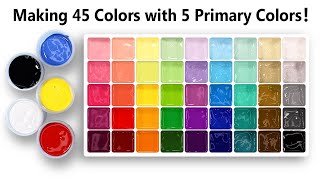
Primary colors are the building blocks of all other hues. In the subtractive color system used for paints, the primary colors are red, blue, and yellow. When combined in different proportions, these colors produce secondary colors (orange, green, violet) and, with careful balance, a spectrum of browns.
Color Theory Basics
Understanding the difference between additive and subtractive mixing is key. Additive mixing—used with light—combines red, green, and blue to produce white. Subtractive mixing—used with pigments—combines red, blue, and yellow to absorb light and produce other colors, including brown. Because pigments reflect rather than emit light, mixing all three primary colors in equal parts tends to produce a muddy, dark brown.
Three Ways to Make Brown Using Primary Colors
-
Equal-Parts Mixing
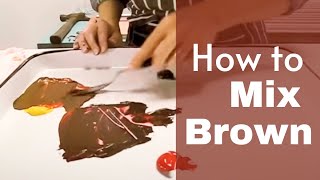
Start by mixing equal amounts of red, blue, and yellow. This creates a neutral, dark brown that works well as a base tone for many subjects.
Tip: Use a palette knife or a small mixing bowl for precise blending. If the resulting brown is too dark, add a touch of white to lighten it.
-
Adjusting Ratios for Warm or Cool Browns
By altering the proportions of the primary colors, you can shift the brown’s temperature:
- Warm brown: Increase the red component while keeping blue and yellow moderate.
- Cool brown: Add more blue than red, with yellow balancing the mix.
- Earthy brown: Emphasize yellow and a small amount of red, then add a dash of blue to deepen the tone.
Experiment with small increments—just a few drops at a time—to see how the hue changes.
-
Using a Neutral