Inequalities Symbols: A Quick Guide
Mastering inequality symbols is essential for anyone studying algebra, calculus, or data analysis. These symbols let you compare numbers, express limits, and describe ranges of values. Whether you’re a student, teacher, or lifelong learner, a clear understanding of these symbols will sharpen your mathematical reasoning and help you solve problems more efficiently.
Common Inequality Symbols
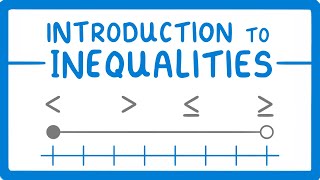
The four primary inequality symbols appear in almost every math curriculum. Each one has a precise meaning:
- Less Than (<) – Indicates that the left side is smaller than the right side.
- Greater Than (>) – Indicates that the left side is larger than the right side.
- Less Than or Equal To (≤) – Shows that the left side is either smaller than or exactly equal to the right side.
- Greater Than or Equal To (≥) – Shows that the left side is either larger than or exactly equal to the right side.
In addition to these, you’ll encounter the Not Equal To (≠) symbol, which states that two quantities are not the same.
Understanding the Meaning of Each Symbol
Less Than (<)
When you see a < b, imagine a number line: a sits to the left of b and is therefore smaller. For example, 3 < 7 is true because 3 is indeed less than 7.
Greater Than (>)
Conversely, a > b means a is to the right of b on a number line. An example is 12 > 9.
Less Than or Equal To (≤)
This symbol combines “less than” with “equal to.” If a ≤ b, then either a is smaller than b or it is exactly the same value. For instance, 5 ≤ 5 is true because the numbers are equal