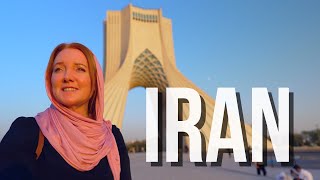
Iran Country Overview
Iran, historically known as Persia, sits at the crossroads of Central Asia, the Middle East, and the Caucasus. With a population of over 85 million people, it is a land of diverse landscapes, rich cultural heritage, and complex socio‑political dynamics. This overview explores Iran’s geography, history, economy, society, and key attractions, providing a balanced snapshot for travelers, scholars, and anyone curious about this fascinating country.
Geography & Climate
Iran’s territory spans roughly 1.6 million square kilometers, making it the 17th largest country in the world. Its terrain ranges from the towering Zagros and Alborz mountain ranges to the expansive Dasht-e Kavir desert in the north‑east. The country is also home to the Caspian Sea coastline to the north and the Persian Gulf and Gulf of Oman to the south.
- Mountains: The Alborz range houses Mount Damavand, the highest peak in the Middle East.
- Deserts: Dasht-e Kavir and Dasht-e Lut are among the hottest and driest deserts globally.
- Rivers: The Karun, Dez, and Zayanderud rivers provide vital water resources for agriculture and industry.
Iran’s climate is equally varied. The northern Caspian coast experiences a humid subtropical climate, while central regions endure a harsh continental climate with hot summers and cold winters. The southern coastal areas enjoy a hot, humid climate influenced by the Persian Gulf.
Historical and Cultural Heritage
Spanning more than 4,000 years, Iran’s civilization is one of the world’s oldest. From the Elamites and Achaemenid Empire to the Safavid and Qajar dynasties, the country has produced influential art, architecture, and intellectual traditions.
- Achaemenid Empire – Founded by Cyrus the Great, this era introduced the concept of a multi‑ethnic empire and monumental architecture such as Persepolis.
- Islamic Golden Age – Scholars like Avicenna and Rumi advanced science, philosophy, and poetry.
- Modern Era – The 20th century saw rapid modernization, the 1979 Revolution, and the establishment of the Islamic Republic.
Today, Iran’s cultural tapestry blends Persian traditions with influences from neighboring regions. Persian (Farsi) is the official language, but Azeri, Kurdish, Arabic, and other languages are spoken across the nation. The country is renowned for its poetry, music, carpet weaving, and cuisine, featuring dishes such as kebab, ghormeh sabzi, and saffron‑infused rice.
Economy & Key Sectors
Iran’s economy is heavily reliant on oil and natural gas exports, accounting for a significant portion of its GDP. However,