Is Bosnia and Herzegovina Divided? A Comprehensive Look at the Country’s Complex Landscape
Nearly thirty years after the war that ravaged the country, the question “Is Bosnia and Herzegovina divided?” remains central to political analysts, investors, and everyday citizens. The answer is nuanced: the nation is divided administratively, ethnically, and politically, yet it also shows signs of bridging gaps through economic reforms and civil society initiatives.
Historical Roots of Division
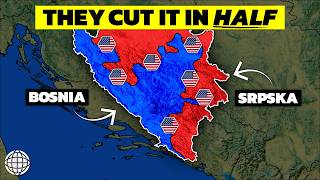
The division of Bosnia and Herzegovina (BiH) can be traced back to the 1992‑1995 conflict that followed the breakup of Yugoslavia. The Dayton Peace Agreement ended the war and established a highly decentralized state structure composed of two main entities—the Federation of Bosnia and Herzegovina (predominantly Bosniak and Croat) and Republika Srpska (predominantly Serb)—plus the multi‑ethnic Brčko District. This arrangement was designed to balance the interests of the three major ethnic groups, but it also entrenched political fragmentation.
Ethnic Composition and Its Political Impact
BiH’s population is roughly 50 % Bosniak, 30 % Serb, and 15 % Croat, with the remaining 5 % belonging to other groups. These identities shape voting patterns, party affiliations, and public policy. While many citizens share common economic concerns, ethnic loyalty often dictates whether they support a “unified” or “entity‑focused” approach to governance.
- Bosniaks mainly reside in the Federation’s central and southern cantons.
- Serbs form the majority in Republika Srpska, where leaders like Milorad Dodik advocate for greater autonomy.
- Croats are concentrated in the western Herzegovina region and parts of central Bosnia.