King of Spain Death: A Historical Overview
Throughout the centuries, the Spanish monarchy has witnessed the rise and fall of numerous sovereigns. The deaths of these monarchs often marked turning points in Spain’s political, religious, and cultural landscape. This article examines the most notable royal deaths, focusing on the circumstances, the immediate impact, and the legacy each king left behind.
Philip II (1516‑1598): The End of an Empire
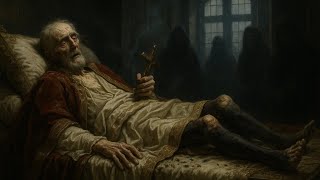
Philip II, one of the most powerful rulers of the 16th century, died on 13 September 1598 at the royal palace of El Escorial. The king had suffered from recurring fevers, severe gout, and a possible kidney disorder. Contemporary accounts describe his final days as marked by intense physical pain and a growing sense of melancholy.
His death ushered in a period of uncertainty. The empire, which spanned Europe, the Americas, and parts of Asia, began to fragment under the rule of his successor, Philip III. The loss of a strong central figure contributed to the emergence of internal conflicts that would later shape Spain’s decline as a global superpower.
Charles II (1665‑1700): The Last Habsburg Monarch
Charles II, known as “the Last Habsburg,” died on 1 November 1700 after a long battle with multiple health issues, likely exacerbated by inbreeding within the royal family. Historical records indicate that he suffered from physical deformities, developmental delays, and chronic illness.
The king’s death without an heir sparked the War of the Spanish Succession, a major European conflict that lasted for over a decade. The succession crisis highlighted the fragility of dynastic politics and ultimately led to the rise of the Bourbon dynasty in Spain.
Philip V (1683‑1746): The First Bourbon King
Philip V, the first Bourbon monarch of Spain, passed away on 9 July 1746. His death was attributed to a stroke, which occurred after a period of declining health. Philip V’s reign was marked by the implementation of French-influenced reforms, centralization of authority, and participation in the War of the Spanish Succession.
His death brought his son, Ferdinand VI, to the throne. The transition was relatively smooth, illustrating the growing stability of the Bourbon line after the tumultuous end of the Habsburg era.
Juan Carlos I (1938‑present): A Modern Monarch’s End of Reign
While Juan Carlos I is still alive, his abdication on 19 June 2014 effectively ended his reign as King of Spain. The decision followed a series of scandals, including allegations of financial impropriety. Although not a death, the abdication serves as a modern parallel to the dramatic endings of earlier monarchs, underscoring the evolving relationship between the Spanish