Who Was the King of Spain in 1492?
When the year 1492 is mentioned, most people think of the discovery of the New World and the end of the Reconquista. The political leader most closely associated with that pivotal year is Fernando II of Aragon, commonly known as Ferdinand the Catholic. Although the modern title “King of Spain” did not exist until the eighteenth century, Ferdinand’s rule, together with his wife Isabella I of Castile, created the foundations of a united Spanish monarchy.
The Catholic Monarchs: Ferdinand II and Isabella I
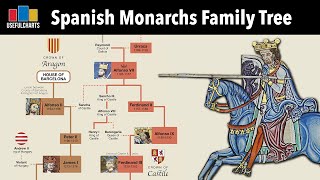
At the close of the fifteenth century, Fernando II inherited the Crown of Aragon, while his wife Isabella I ruled Castile. Their marriage in 1469 linked two of the most powerful Iberian kingdoms, and their joint reign is often described as the birth of a unified Spain. In 1492, the couple achieved two historic milestones:
- Completion of the Reconquista – the capture of Granada ended nearly eight centuries of Muslim rule on the Iberian Peninsula.
- Funding Christopher Columbus’s voyage – the expedition that would lead to the European discovery of the Americas.
Because the crowns of Castile and Aragon remained legally separate, each monarch retained distinct titles. Ferdinand was king of Aragon, while Isabella was queen of Castile. Their children would later inherit both crowns, paving the way for a more centralized kingdom.
Why “King of Spain” Is a Later Invention
The term “Spain” (España) referred historically