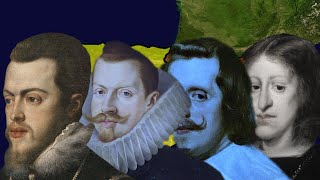
King Philip IV of Spain: The Man Behind the Habsburg Legacy
Every royal lineage has its own set of hidden truths—skeletons tucked away in dusty archives, whispered scandals that never made the official record. In the case of Spain’s 17th‑century monarch, these secrets are as intricate as the tapestries that once draped the halls of the Spanish court. This article invites you to step into the opulent world of the Habsburg dynasty and uncover the layers that make King Philip IV a figure both celebrated and controversial.
Early Life and Ascension
Born on September 8, 1605, Philip was the son of King Philip III and Queen Maria of Austria. He entered the throne at the tender age of sixteen, following his father’s death in 1621. His early years were shaped by the political and economic pressures that plagued a Spain already stretched thin by its global ambitions.
Education and Mentorship
Philip’s education combined rigorous classical studies with a strong emphasis on military strategy. He was tutored by some of the most prominent intellectuals of the era, including the Spanish poet Luis de Góngora. Yet, despite his scholarly background, the young king’s reign would soon be dominated by warfare and financial strain.
The Golden Age Meets Turbulence
Philip IV’s reign coincided with what many historians call the Spanish Golden Age—a period of flourishing art, literature, and cultural influence. However, this cultural bloom was juxtaposed against a backdrop of continuous conflict and economic decline.
Military Campaigns
Under Philip’s rule, Spain fought the Eighty Years' War against the Dutch Republic, the Franco-Spanish War, and the Catalan Revolt. These campaigns drained the treasury and weakened Spain’s standing on the European stage.
Financial Struggles
Heavy taxation, rampant inflation, and costly military expenditures led to a steady decline in Spain’s wealth. The king’s court, though lavish, struggled to keep pace with the demands of an empire in decline.
Art, Culture, and the Habsburg Splendor
One cannot discuss Philip IV without acknowledging his patronage of the arts. The king’s court became a hub for some of the most celebrated artists of the time.
- Diego Velázquez—the painter who captured the essence of Spanish royalty in