The Legacy of King Philip of Spain in the Philippines
The Philippines, an archipelago comprised of over 7,000 islands, has a rich and complex history that spans thousands of years. Prior to the arrival of European colonizers, the islands were inhabited by various indigenous groups, each with their own distinct culture and traditions.
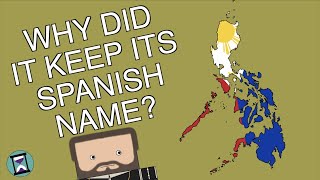
However, in the 16th century, the Philippines became a Spanish colony, and it was during this period that the country's history took a dramatic turn. King Philip II of Spain played a significant role in shaping the country's future, and his legacy continues to be felt to this day.
The Spanish Colonization of the Philippines
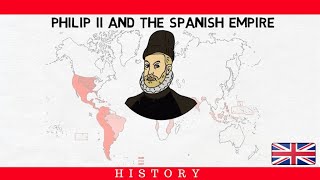
In 1565, Spanish conquistador Miguel López de Legazpi established the first Spanish settlement in the Philippines, which marked the beginning of Spanish rule in the islands. King Philip II, who was born in 1527 and reigned from 1556 to 1598, was instrumental in promoting the colonization of the Philippines.
The Spanish colonization of the Philippines brought about significant changes to the country's language, culture, and politics. The Spanish introduced Christianity, which became a dominant force in the country, and established a system of government that was modeled after the Spanish monarchy.
However, the Spanish colonization of the Philippines was also marked by violence and exploitation. The Spanish forced the indigenous population to adopt their language and culture, and many Filipinos were subjected to forced labor, slavery, and other forms of exploitation.
The Impact of King Philip II's Policies on the Philippines
King Philip II's policies had a profound impact on the Philippines. He established the Royal Audiencia, a high court that was responsible for administering justice and collecting taxes in the Philippines. He also established the Galleon Trade, which brought significant wealth to the Spanish empire but also led to the exploitation of the Philippines' natural resources.
Additionally, King Philip II's policies led to the introduction of Christianity in the Philippines. He encouraged the establishment of missions and the conversion of the indigenous population to Christianity, which had a profound impact on the country's culture and identity.
The Legacy of King Philip II in the Philippines
The legacy of King Philip II in the Philippines is complex and multifaceted. On the one hand, he played a significant role in shaping the country's language, culture, and politics. He introduced Christianity, which became a dominant force in the country, and established a system of government that was modeled after the Spanish monarchy.
On the other hand, the Spanish colonization of the Philippines was also marked by violence and exploitation. Many Filipinos were subjected to forced labor, slavery, and other forms of exploitation, and the country's natural resources were exploited for the benefit of the Spanish empire.
The Philippines' Struggle for Independence
The Philippines' struggle for independence from Spanish rule began in the late 18th century. The country's first national hero, José Rizal, wrote several novels and essays that criticized Spanish rule and advocated for Philippine independence.
The Philippines eventually gained independence from Spanish rule in 1898, after the Spanish-American War. However, the country's history was far from over. The United States took control of the Philippines and ruled the country for over a decade, before granting it independence in 1946.
Conclusion
The legacy of King Philip II in the Philippines is complex and multifaceted. He played a significant role in shaping the country's language, culture, and politics, but his policies also led to the exploitation and violence against the indigenous population. The Philippines' struggle for independence was a long and difficult one, but the country eventually gained its freedom in 1946. Today, the Philippines is a vibrant and diverse nation, with a rich history and culture that reflects its complex past.