Understanding How to Label a Coordinate Plane
When you first encounter the Cartesian plane, the most important step is learning how to label a coordinate plane correctly. Proper labeling provides a clear reference for plotting points, graphing equations, and interpreting data. This article walks you through the basics, offers practical classroom tips, and points you to free resources for deeper practice.
Why Proper Labeling Matters
Accurate labels on the x‑axis and y‑axis eliminate confusion and help students develop spatial reasoning. Without clear labels, a simple task like plotting the point (3, ‑2) can become a source of frustration. By establishing a consistent labeling system early, you set the stage for smoother algebra work, geometry exploration, and data analysis.
Step‑by‑Step Guide to Labeling a Coordinate Plane
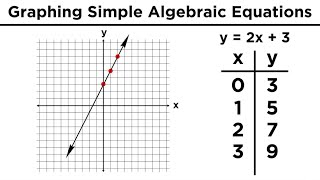
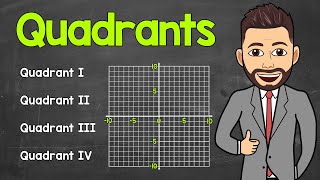
- Draw the axes. Begin with a horizontal line for the x‑axis and a vertical line for the y‑axis. Make sure they intersect at the origin (0, 0).
- Mark equal intervals. Choose a scale that suits the problem—typically one unit per tick mark. Label each tick with its numerical value, extending in both positive and negative directions.
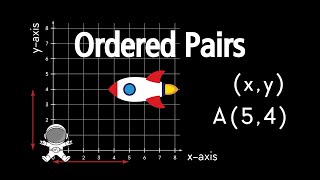
- Label the axes. Write “x” at the end of the horizontal line and “y” at the top of the vertical line. Some teachers also add “horizontal axis” and “vertical axis” underneath for younger learners.
- Indicate the direction. Use arrows at the ends of each axis to show that the plane continues indefinitely.
- Include a title (optional). For specific activities, a title such as “Plotting Points for Linear Equations” can help students focus on the objective.
Common Mistakes to Avoid
- Skipping the negative side of the axes. Even simple problems may require points like (‑4, 5).
- Using inconsistent scales on the two axes, which can distort the shape of graphed lines.
- Leaving out the origin label. The point (0, 0) is a crucial reference for many algebraic concepts.
Integrating the Labeling Process into Lessons
Our mission? Make math fun, engaging, and oh‑so‑easy for both you & your students. Below are three classroom strategies that reinforce the labeling skill while keeping the lesson lively.
1. Quick‑Draw Warm‑Ups
Start each class with a 2‑minute “draw‑your‑plane” challenge. Hand out blank graph paper and ask students to label the axes, mark intervals, and add arrows. Review a few examples on the board, highlighting correct and incorrect labeling.
2. Interactive Plotting Games
Use free online tools such as Math Antics to display a dynamic coordinate plane. Students can drag points to the correct location after you call out coordinates like (‑2, 3). This reinforces the visual connection between numbers and positions on the plane.
3. Real‑World Data Projects
Collect simple data—temperature over a week, height of plants, or scores on