What Is Labelling a Wave?
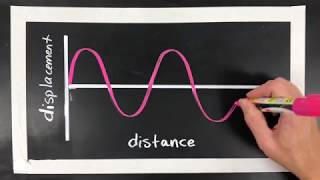
Labelling a wave means identifying and marking its fundamental characteristics on a diagram or graph. By assigning clear symbols to properties such as amplitude, wavelength, frequency, and phase, students and engineers can communicate ideas quickly and avoid misinterpretation. Proper labeling is a cornerstone of physics education, signal processing, and any field that works with periodic phenomena.
Why Labelling Matters in Physics and Engineering
When a wave is presented without labels, the viewer must guess which part of the diagram represents which quantity. This can lead to errors in calculations, design, and troubleshooting. Accurate labels provide a shared language that speeds up problem solving, whether the task is analyzing a simple sinusoidal wave on a whiteboard or interpreting complex electromagnetic spectra in a research lab.
Key Parameters to Label on a Wave
- Amplitude (A) – the maximum displacement from the equilibrium position.
- Wavelength (λ) – the distance between two consecutive points that are in phase.
- Frequency (f) – the number of cycles that pass a fixed point per unit time.
- Period (T) – the time required for one complete cycle, equal to 1/f.
- Phase (ϕ) – the offset of the wave relative to a reference point.
- Wave speed (v) – the product of frequency and wavelength (v = f·λ).
Amplitude
The amplitude is usually marked with a vertical arrow from the equilibrium line to the peak of the wave. In many textbooks the symbol A is placed near this arrow. A larger amplitude indicates more energy in the wave, but it does not affect the wave’s speed in a linear medium.