Labelling Body Parts: A Beginner’s Guide to Anatomical Terms
Understanding how to label body parts is a fundamental skill for students, educators, and anyone interested in health and science. Whether you are teaching kids, studying anatomy for a course, or simply curious about the human body, mastering the major regional terms makes learning faster and more accurate. This article breaks down the most common anatomical directions, planes, and body regions, and offers practical strategies for effective memorisation.
Why Learn Anatomical Labelling?
Labelling body parts is more than a classroom exercise; it provides a universal language for doctors, nurses, physiotherapists, and researchers worldwide. When you can correctly identify the anterior, posterior, proximal, and distal aspects of a structure, you can:
- Communicate clearly with healthcare professionals.
- Interpret medical images and diagrams with confidence.
- Support children’s learning by using consistent terminology.
- Build a solid foundation for advanced studies in physiology and pathology.
Core Anatomical Directions
The body can be described using a set of standard directional terms. These are the building blocks for any labelling activity.
- Anterior (ventral) – toward the front of the body.
- Posterior (dorsal) – toward the back of the body.
- Superior (cranial) – toward the head or upper part of a structure.
- Inferior (caudal) – toward the feet or lower part of a structure.
- Medial – toward the midline of the body.
- Lateral – away from the midline, toward the sides.
- Proximal – closer to the point of attachment or origin.
- Distal – farther from the point of attachment or origin.
Major Body Regions and Their Landmarks
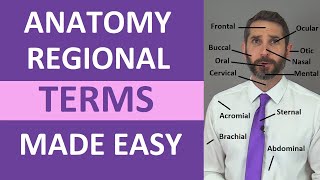
Learning the location of many of our major organs and their surrounding structures helps you place each part on a diagram quickly. Below is a quick reference for the most frequently labelled regions.
- Head and Neck – includes the skull, facial muscles, thyroid gland, and major blood vessels.
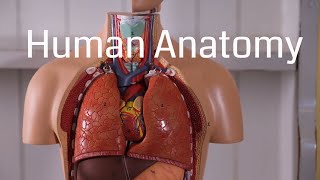
- Thorax (Chest) – houses the lungs, heart, trachea, and esophagus. The sternum and rib cage serve as key landmarks.
- Abdomen – contains the liver, stomach, spleen, pancreas, and intestines. The umbilicus (navel) is a central reference point.
- Pelvis – supports the bladder, reproductive organs, and lower intestines. The pubic symphysis marks the front of the pelvic girdle.
- Upper Limbs – shoulder, arm, elbow, forearm, wrist, and hand. The humerus, radius, and ulna are the primary bones

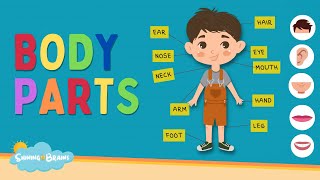

![Body [Kids Vocab] My Body Parts 🖐️ Head to Toes English for Kids](https://i.ytimg.com/vi/SUt8q0EKbms/mqdefault.jpg)