Life Cycle Of A Reptile
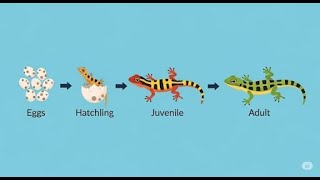
Reptiles are a diverse group of vertebrates that include turtles, crocodilians, lizards, snakes, and tuatara. Although their appearances and habitats vary widely, most reptiles share a similar sequence of life‑history stages: egg formation (or internal development), incubation, hatching or birth, juvenile growth, attainment of sexual maturity, and reproduction. Understanding this cycle helps explain how reptiles adapt to environments ranging from arid deserts to tropical rainforests.
Reproductive Modes
Reptiles exhibit three primary reproductive strategies:
- Oviparous – eggs are laid outside the mother’s body and develop in the environment. This is the most common mode among turtles, many lizards, and most snakes.
- Viviparous – embryos develop inside the mother and receive nutrients directly, resulting in live birth. Examples include some skinks, boa constrictors, and certain viviparous lizards.
- Ovoviviparous – eggs are retained within the mother until they hatch, and the young are born alive. This strategy occurs in many rattlesnakes and some sea turtles.
The choice of strategy often correlates with climate, predation pressure, and the need to protect developing embryos from environmental extremes.
Egg Formation and Incubation
In oviparous species, the female produces shelled eggs after internal fertilization. The shell, composed mainly of calcium carbonate, provides protection while allowing gas exchange. Egg size and shape vary: turtle eggs are often spherical and leathery, whereas many snake eggs are elongated and pliable.
Incubation temperature plays a crucial role in determining developmental rate and, in many turtles and some lizards, the sex of the offspring—a phenomenon known as temperature‑dependent sex determination (TSD). For instance, warmer incubation temperatures may produce more females in certain turtle species, while cooler temperatures yield more males. In species lacking TSD, sex is determined genetically, as in most snakes.
The duration of incubation ranges from a few weeks to several months. Desert‑dwelling reptiles may have shorter incubation periods to take advantage of brief rainy seasons, whereas temperate species may undergo a diapause—a temporary halt in development—until conditions improve.