How to Write a Perfect Lower Case m: Handwriting Tips for Kids and ESL Learners
The lower case m is one of the most common letters in English, appearing in words such as mom, home, and time. Because it is used so often, a clear, correctly‑formed m helps children read fluently and gives writers confidence on the page. This article walks you through the proper stroke order, offers practical practice ideas, and shows how digital tools like the Super Simple App can make learning fun.
Why the Lower Case m Deserves Special Attention
- Frequency – The letter m appears in roughly 2 % of printed English text, making it a high‑frequency character.
- Shape consistency – A well‑formed m consists of three distinct arches. Inconsistent arches can cause confusion with letters such as n or w.
- Early reading links – Research on early literacy shows that clear print handwriting supports word‑recognition skills, especially for beginning readers.
Step‑by‑Step Stroke Order for the Lower Case m
- Start at the top line. Place the pen or pencil on the upper guideline and make a short, upward slant that curves slightly to the right, forming the first “hook.”
- Drop to the baseline. From the tip of the hook, draw a straight line down to the bottom line.
- First arch. Without lifting the pen, curve upward to the mid‑line, then back down to the baseline, creating the first hump.
- Second arch. Continue the motion by curving up again to the mid‑line and returning to the baseline, completing the second hump.
- Finish. Lift the pen gently; the three‑arch shape of the m is now complete.
Notice the rhythm: down‑up‑down‑up‑down. Practicing this pattern slowly builds muscle memory.
Visual Cues That Help Learners Remember the Shape
- “Three little mountains.” Imagine drawing three small peaks in a row.
- “M for “mountain” or “mushroom.” Relating the letter to a familiar object reinforces the three‑arch pattern.
- “M looks like a mini‑bridge.” The two arches can be visualized as the arches of a bridge.
Hands‑On Practice Activities
Combining tactile experiences with visual guidance speeds up mastery.
- Sand or shaving‑cream tracing. Spread a thin layer on a tray, then use a finger to trace the three arches. The sensory feedback helps children feel the motion.
- Air‑writing. Have learners use a large arm motion to “write” an m in the air. This reinforces the size and proportion of each arch.
- Dot‑to‑dot worksheets. Provide a series of numbered dots that outline the stroke order. Connecting the dots in order mirrors the correct movement.
- Whiteboard drills. Quick, timed repetitions on a dry‑erase board keep the activity lively and allow for immediate correction.
Using the Super Simple App for Extra Practice
The Super Simple App offers interactive handwriting modules that guide learners through each stroke. Features that align with the lower case m include:
- Animated demonstrations that show the exact motion from start to finish.
- Instant feedback: the app highlights any deviation from the correct path.
- Progress tracking so teachers and parents can see improvement over time.
Because the app is designed for both native‑English speakers and ESL learners, it includes voice prompts and multilingual instructions, making it a versatile classroom tool.
Meet Funny Bunny Frankie: A Fun Way to Learn the m
Funny Bunny Frankie, the lovable joke‑telling character from the Super Simple series, hosts a short video where he “monkey‑around” with the letter m. In the clip, Frankie:
- Counts three “M” sounds while hopping across three stepping stones.
- Shows a quick sketch of the three‑arch shape, then asks viewers to repeat it.
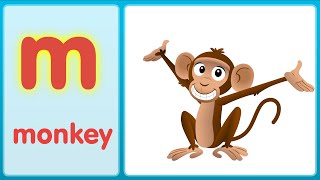
- Ends with a silly rhyme—“M is for monkey, m‑m‑m!”—that reinforces the sound and shape.
Using a character that children already love makes the lesson memorable and encourages repeated practice.
Classroom Strategies from the Iowa Early Literacy Model
The Iowa Early Reading and Writing program emphasizes print‑handwriting integration. Teachers can adopt the following strategies for the lower case m:
- Modeling on a large chart. Write a big m on the board, point out each stroke, and have students echo the motion.
- Guided practice with lined paper. Provide paper that includes a top line, mid‑line, and baseline. The three lines help learners keep arches uniform.
- Peer review. Pair students to check each other’s work, focusing on the three‑arch shape and consistent spacing.
- Daily “Letter of the Day.” Rotate focus letters; when it’s m day, incorporate the letter into math problems, story time, and art projects.
Common Mistakes and How to Fix Them
- Only two arches. Remind students that the letter needs three peaks. Use the “mountain” visual cue.
- Uneven arches. Encourage learners to keep the height of each hump the same by aligning the top of each arch with the mid‑line.
- Too much spacing between arches. Show a correctly spaced example and have students copy it on a grid.
- Starting on the baseline. Emphasize the importance of beginning on the top line; a quick “up‑stroke” practice can help.
Assessing Mastery
After a week of focused practice, use a simple rubric:
- Shape accuracy (0‑2 points). Does the letter have three clear arches?
- Proportion (0‑2 points). Are the arches the same height and width?
- Spacing (0‑2 points). Is the distance between arches even?
- Speed with legibility (0‑2 points). Can the student write the letter quickly while keeping it readable?
A total of 6‑8 points indicates readiness to move on to more complex writing tasks.
Conclusion
Mastering the lower case m is a small but powerful step toward fluent reading and confident writing. By following the three‑arch stroke order, using visual cues, and incorporating engaging activities—whether it’s sand tracing, the Super Simple App, or a lesson with Funny Bunny Frankie—learners can develop strong muscle memory and clear print. Teachers can reinforce these skills with proven classroom strategies from the Iowa early‑literacy model, while regular assessment ensures steady progress.
With consistent practice and a bit of fun, the lower case m will become a natural part of every child’s writing toolbox. Happy writing!