Understanding Lung Cancer Screening Results
Early detection of lung cancer can dramatically improve survival rates, and lung cancer screening with low‑dose computed tomography (LDCT) is the most widely accepted method for identifying disease at a treatable stage. However, receiving a screening result can raise many questions. This article explains what screening results mean, how they are reported, and what you can expect next.
What Is Lung Cancer Screening?
Lung cancer screening is a preventive health service offered to individuals at high risk—typically adults aged 55 to 80 who have a 30 pack‑year smoking history and currently smoke or have quit within the past 15 years. The test uses a low‑dose CT scan to create detailed images of the lungs, allowing radiologists to spot small nodules that may represent early cancer.
How Results Are Categorized
Radiology reports follow standardized categories that help clinicians decide on follow‑up actions. The most common system is the Lung‑RADS (Lung Imaging Reporting and Data System) scale, which ranges from 1 to 4:
- Lung‑RADS 1: Negative—no nodules or only benign‑appearing findings.
- Lung‑RADS 2: Benign appearance—small nodules that are unlikely to be cancer.
- Lung‑RADS 3: Probably benign—larger or growing nodules that need a short‑term repeat scan.
- Lung‑RADS 4: Suspicious—findings that require additional diagnostic testing, such as PET‑CT, biopsy, or referral to a specialist.
These categories are designed to reduce unnecessary procedures while ensuring that potentially serious abnormalities receive prompt attention.
What You Can Expect When Getting a Result
After your LDCT scan, the radiology team will review the images and generate a report. Most programs aim to deliver results within two weeks. Here’s a typical timeline:
- Notification: You receive a letter, secure email, or phone call indicating the Lung‑RADS category.
- Explanation: A clinician discusses the meaning of the category, emphasizing whether additional imaging or a specialist referral is needed.
- Follow‑up plan: Depending on the category, you may be scheduled for a repeat LDCT in 3, 6, or 12 months, or you may be directed to a pulmonologist or thoracic surgeon for further evaluation.
Understanding the category helps you stay calm and informed. For example, a Lung‑RADS 1 result means you can continue routine annual screening, while a Lung‑RADS 4 result signals that a more detailed work‑up is required.
Interpreting Common Findings
Even when a scan shows nodules, most are not cancerous. The following factors influence the assessment:
- Size: Nodules smaller than 6 mm are usually classified as low risk.
- Growth rate: Rapid growth over a short interval raises suspicion.
- Appearance: Solid versus ground‑glass opacity, calcification patterns, and location within the lung all affect risk estimation.
- Patient history: Ongoing smoking, occupational exposures, and family history are considered alongside imaging features.
Benefits of Early Detection
Large clinical trials, such as the National Lung Screening Trial (NLST), have demonstrated a roughly 20 % reduction in lung‑cancer‑related mortality among screened individuals compared with chest X‑ray. Early detection often means the tumor is small enough for minimally invasive surgery or stereotactic radiotherapy, leading to better outcomes and fewer complications.
Limitations and Potential Drawbacks
Screening is not without challenges. Unfortunately, a lot of detected nodules turn out to be benign, leading to additional scans and occasional invasive procedures that may cause anxiety or minor complications. False‑positive results can also increase healthcare costs. Moreover, individuals who have never smoked but develop lung cancer are not captured by current screening guidelines.
Recent Data and Ongoing Research
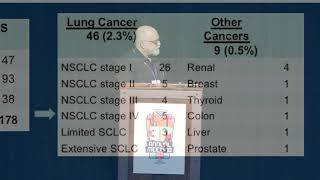
Recent presentations from the GTSC meetings have highlighted evolving strategies to improve the accuracy of screening results. Lectures from the 32nd annual meeting of the GTSC in Naples, FL (March 7‑10 2019) and the 2018 GTSC Meeting emphasized the role of artificial‑intelligence algorithms in distinguishing benign from malignant nodules, potentially reducing unnecessary follow‑ups.
Dr. Haval Balata, MBChB, MRCP‑UK, from the Manchester University NHS Foundation Trust, discussed how integrating risk‑prediction models with LDCT findings can personalize screening intervals, ensuring high‑risk patients receive more frequent monitoring while low‑risk individuals avoid over‑screening.
How to Stay Informed
Keeping up with the latest guidelines and research helps you make informed decisions about screening. You can learn more about the evolving recommendations on reputable medical websites, and many experts share detailed analyses in podcasts and webinars. For instance, the show notes for a recent discussion on lung‑cancer screening are available at:
https://bit.ly/4bMnAtp
Becoming a member of specialized health platforms can also grant you access to exclusive content, such as in‑depth interviews with leading oncologists. Membership details can be found at:
https://peterattiamd.com/subscribe/
Next Steps After Receiving Your Result
If you have just received a screening result, follow these practical steps:
- Review the Lung‑RADS category with your primary care provider.
- Ask about the recommended follow‑up schedule and any lifestyle changes that could lower risk.
- Consider smoking cessation resources if you are still smoking; quitting dramatically reduces future cancer risk.
- Document the date of your screening and set reminders for the next appointment.
Remember that screening is a continuous process. Even a negative result (Lung‑RADS 1) does not guarantee permanent immunity, and annual LDCT remains the standard for high‑risk individuals.
Conclusion
Lung cancer screening results provide a crucial snapshot of lung health for those at elevated risk. By understanding the categorization system, knowing what to expect after a result, and staying informed about the latest research, patients can navigate the screening pathway with confidence. Early detection remains the most effective tool for reducing lung‑cancer mortality, and ongoing advances promise to make results even more precise and actionable.