How to Convert M³ Hr to Lpm for Water Flow – A Complete Guide
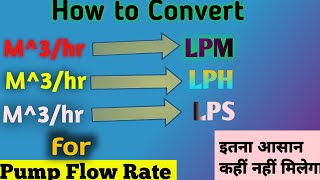
Whether you are working in a reverse‑osmosis desalination plant, a power‑generation facility, or any industrial process that handles water, you will often need to switch between cubic meters per hour (m³ hr) and liters per minute (lpm). This article explains the basic concept of unit conversion, provides a step‑by‑step formula, shares useful tricks, and highlights where the conversion matters most in real‑world water‑treatment operations.
Why Unit Conversion Matters in Water Processes
Accurate flow‑rate data is the backbone of safe and efficient plant operation. A small error in conversion can lead to:
- Incorrect chemical dosing, affecting water quality.
- Improper pump sizing, causing energy waste or equipment damage.
- Non‑compliance with regulatory limits on discharge or intake rates.
Because most equipment specifications are listed in m³ hr while many control panels and monitoring software display lpm, engineers must be fluent in converting between the two.
Basic Concept of Unit Conversion
Unit conversion is simply the multiplication (or division) of a quantity by a factor that relates the two units. The factor is derived from the definition of each unit. For water flow:
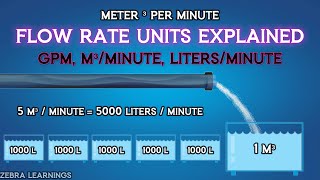
- 1 m³ = 1,000 L (one cubic meter contains one thousand liters).
- 1 hour = 60 minutes.
By chaining these two relationships, we obtain the conversion factor for m³ hr → lpm.
Step‑by‑Step Conversion Formula
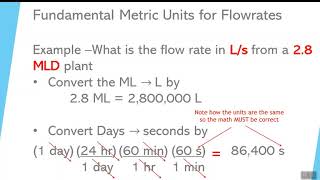
- Convert cubic meters to liters. Multiply the flow value by 1,000.
- Convert hours to minutes. Divide the result by 60.
Combining the two steps gives a single, easy‑to‑remember formula:
lpm = (m³ hr × 1,000) ÷ 60
Or, simplified:
lpm ≈ m³ hr × 16.67
Practical Example
Imagine a reverse‑osmosis (RO) module that is rated at 7.5 m³ hr. To read this flow on a control panel that uses lpm, apply the formula:
lpm = 7.5 × 16.67 ≈ 125 lpm
Thus, the module delivers roughly 125 liters of permeate each minute.
Unit‑Conversion Tricks You Can Use on the Fly
- Round to 17. For quick mental math, multiply by 17 instead of 16.67; the result will be within 2 % of the exact value—acceptable for preliminary checks.
- Use a 1‑2‑3 shortcut. Multiply by 1,000 (to get liters) then move the decimal two places left (divide by 100) and finally divide by 0.6 (which is the same as multiplying by 1.667). This keeps the numbers manageable without a calculator.
- Leverage online tools. Websites such as ESDLT Math Tools provide instant conversion calculators that handle m³ hr, lpm, and many other flow units.
Where the Conversion Is Used in Real‑World Plants
SWRO (Seawater Reverse Osmosis) DesalinationIn the ENDLESS LEARNING SWRO Plant Training Series, instructors frequently switch between m³ hr (plant‑level capacity) and lpm (module‑level performance). Accurate conversion ensures that the total plant capacity matches the sum of individual module flows.
Power‑Plant Cooling SystemsChandan Pathak’s “Power Plant Discussion” channel often references cooling‑water circulation rates. Engineers design cooling towers based on m³ hr, but real‑time monitoring dashboards display lpm to help operators react quickly to load changes.
Chemical Dosing and Process ControlWhen dosing anti‑scaling agents or disinfectants, the required dosage is usually expressed per minute of water flow. Converting the plant’s nominal flow (m³ hr) to lpm lets you calculate the exact pump speed for the dosing system.
Common Mistakes to Avoid
- Skipping the 1,000‑liter factor. Forgetting to convert cubic meters to liters will underestimate the flow by a factor of 1,000.
- Dividing by 60 twice. Some users mistakenly divide both the numerator and denominator by 60, which reduces the result by an extra 60 × .
- Mixing up “per hour” and “per minute”. Always verify which unit the source data uses before applying the formula.
Using a Spreadsheet for Repeated Conversions
If you regularly convert many values, set up a simple Excel or Google‑Sheets column:
- Enter the m³ hr value in column A.
- In column B, use the formula =A2*16.67 to obtain lpm.
This approach eliminates manual errors and provides an audit trail for process documentation.
Quick Reference Table
- 1 m³ hr ≈ 16.67 lpm
- 5 m³ hr ≈ 83.35 lpm
- 10 m³ hr ≈ 166.7 lpm
- 20 m³ hr ≈ 333.4 lpm
Conclusion
Converting m³ hr to lpm is a fundamental skill for anyone involved in water handling, desalination, or power‑plant cooling. By remembering the simple factor of 16.67 (or using the quick‑round‑to‑17 trick), you can move confidently between the two units, avoid costly mistakes, and keep your processes running smoothly. Whether you rely on a handheld calculator, an online tool like ESDLT Math Tools, or a spreadsheet, the mathematics remains the same: multiply by 1,000 to get liters, then divide by 60 to get minutes. Master this conversion, and you’ll have one more reliable tool in your engineering toolbox.