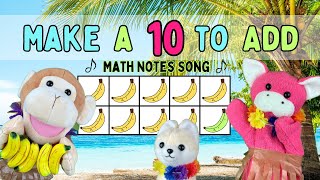
Making Ten Worksheet: A Hands‑On Approach to Mastering Addition
Adding numbers that total ten is one of the first mental‑math strategies taught in kindergarten and first grade. When children can instantly see how any pair of numbers makes ten, they gain confidence, speed, and a deeper understanding of number relationships. This article explains why the “making ten” concept matters, shows how to use ten‑frame visuals and simple crafts, and provides a printable Making Ten Worksheet that can be used at home, in the classroom, or during a craftsforkids activity session.
Why Learning to Make Ten Is Essential
- Builds mental math fluency – Children quickly retrieve pairs such as 3 + 7 or 6 + 4 without counting on fingers.
- Supports later addition and subtraction – Knowing ten‑pairs helps with regrouping in column addition and with “taking away” strategies.
- Connects to everyday situations – From counting coins to measuring ingredients, ten is a natural unit in daily life.
Research shows that early exposure to ten‑pair strategies improves performance on standardized addition tests, but the benefit is strongest when practice is engaging and visual.
Using Ten Frames to Visualize Ten
Ten frames are simple 2 × 5 grids that let children see how numbers combine to reach ten. A teacher might place three counters in the top row and then ask the student to fill the remaining slots. The answer is “seven more,” reinforcing the 3 + 7 = 10 relationship.
- Classroom tip: Print a set of blank ten‑frame cards, let students color in the first number, and then have them draw the complementary number.
- Home activity: Use a sheet of paper and draw a ten‑frame with a pencil. Ask your child to place stickers or small objects to complete ten.
Crafting “Making Ten Friends” for Hands‑On Learning
Integrating crafts makes the abstract idea concrete. The Making Ten Friends Worksheet can be turned into a cut‑and‑paste project:
- Print the worksheet (see the sample below).
- Cut out each pair of numbers.
- Glue the pairs onto a larger “Ten‑Friends” poster, arranging them in a circle.
- Label each pair with a friendly face or a small craft element (e.g., pom‑pom, button).
This activity aligns with the craftsforkids hashtag #activitiesforkids and encourages fine‑motor practice while reinforcing math.
Sample Making Ten Worksheet
Instructions: Fill in the blank so each equation equals ten. Use a pencil, a ten‑frame, or a craft piece to help you.
- 1 + _____ = 10
- 2 + _____ = 10
- 3 + _____ = 10
- 4 + _____ = 10
- 5 + _____ = 10
- 6 + _____ = 10
- 7 + _____ = 10
- 8 + _____ = 10
- 9 + _____ = 10
- 0 + _____ = 10
Answer key (for teacher use): 9, 8, 7, 6, 5, 4, 3, 2, 1, 10.
Extending the Worksheet: Word Problems and Real‑World Context
To deepen understanding, add a short “What Numbers?” section after the basic pairs:
- “Sam has 3 red blocks. He wants a total of ten blocks. How many blue blocks does he need?”
- “A baker uses 6 cupcakes for a batch. How many more cupcakes are needed to make a full batch of ten?”
These problems connect the abstract ten‑pair idea to everyday scenarios, reinforcing the relevance of the skill.
Homework Ideas That Keep the Momentum Going
- Ten‑Frame Journal: Each night, have the child draw a ten‑frame and fill in two numbers that make ten. Over a week they will see all ten combinations.
- Digital Practice: Websites such as Math Antics or the Adding with Ten Frames video on YouTube (search #tenframes #math) provide short clips that demonstrate the strategy.
- Family Shopping Game: While grocery shopping, ask the child to find items that together cost ten dollars (or ten cents) using the price tags.
Video Resources for Visual Learners
Visual explanations help solidify the concept. A recommended video is “Making Ten with Ten Frames” (search #math #tenframes #school). The short clip shows a teacher placing counters on a ten‑frame, narrating each step, and then asking the viewer to predict the missing number. Watching the video before completing the worksheet can boost confidence.
Tips for Teachers and Parents
- Model first: Demonstrate one ten‑pair using a ten‑frame, then let the child try.
- Use consistent language: Say “make ten” instead of “add up to ten” to reinforce the specific strategy.
- Celebrate every correct pair: A quick high‑five or a sticker reinforces positive learning.
- Rotate activities: Alternate between worksheets, crafts, digital games, and real‑world counting to keep interest high.
Conclusion
Mastering the “making ten” strategy is a cornerstone of early arithmetic. By combining a printable Making Ten Worksheet with ten‑frame visuals, craft projects, and short video lessons, educators and parents can provide a rich, multi‑sensory experience. Whether the child is completing the worksheet at a desk, arranging stickers on a ten‑frame, or counting coins at the kitchen table, each activity strengthens mental math fluency and prepares them for more complex addition and subtraction later on.
Start today: print the worksheet, set up a ten‑frame, and let your child discover the many ways to add up to ten!