Multiplication Bingo Game: Turning Math Practice into Play
Learning multiplication tables is a cornerstone of elementary mathematics, yet many students find rote memorization tedious. The Multiplication Bingo Game blends the excitement of bingo with targeted practice, giving children a fast way to learn their times tables while staying engaged. This article explores how the game works, why it is effective for grades 2 and 3, and where you can find ready‑made sets for classroom or home use.
How Multiplication Bingo Works
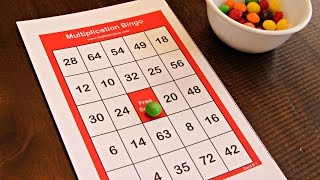
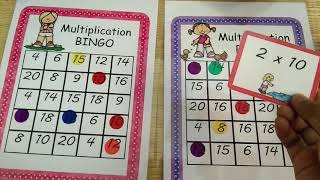
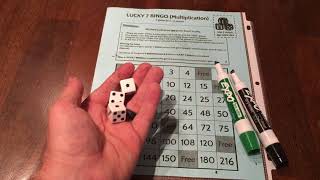
Traditional bingo uses numbered squares; in the multiplication version each square contains either a product (for example, 12) or a multiplication problem (such as 3 × 4). The caller announces a problem or a product, and players cover the matching square on their card. The first player to complete a preset pattern—usually a row, column, or diagonal—shouts “Bingo!” and wins the round.
Key Benefits for Young Learners
- Improved recall: Repeated exposure to the same products reinforces memory pathways, making facts easier to retrieve during timed tests.
- Active engagement: The game’s competitive element keeps attention focused, reducing the boredom that often accompanies worksheet drills.
- Instant feedback: When a player marks a square, they instantly see whether the answer is correct, allowing quick self‑correction.
- Social learning: Playing in pairs or small groups encourages discussion of strategies, such as “I know 6 × 7 is 42 because 6 × 5 is 30 and 6 × 2 is 12.”
Setting Up a Multiplication Bingo Session
- Choose the focus: Decide which multiplication tables to practice (e.g., 2‑9). For early learners, start with 2‑5 and gradually add higher numbers.
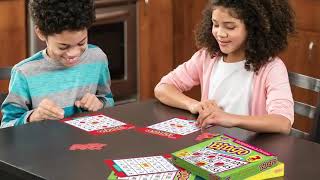
- Create or purchase cards: You can print custom cards using free templates or buy a complete set. Trend Enterprises offers a ready‑made kit that includes cards, markers, and a caller sheet. Purchase here: https://www.trendenterprises.com/collections/bingo/products/t6135
- Prepare the caller list: Write each multiplication problem on slips of paper or use a digital randomizer. The Wolfram Demonstrations Project provides an interactive version you can explore at http://demonstrations.wolfram.com/MultiplicationBingo/.
- Play and rotate: After a round ends, shuffle the cards and start a new game. Rotating cards ensures that each student encounters a variety of numbers.
Variations to Keep the Game Fresh
- Timed rounds: Set a one‑minute timer for each call. Players must decide quickly, sharpening mental math speed.
- Team bingo: Groups of two or three share a card and discuss each answer before marking, fostering collaboration.
- Reverse bingo: The caller announces the product, and players must write the corresponding factor pair on a separate sheet before covering the square.
- Digital bingo: Several educational websites host virtual bingo boards that can be projected on a screen, allowing whole‑class participation without paper.
Integrating Multiplication Bingo into the Classroom
Teachers can use the game as a warm‑up, a review activity, or a reward for completing worksheets. Because the format is flexible, it fits into a 10‑minute math block or a longer math center session. Pair the game with a brief lesson on strategies—such as using the commutative property (3 × 4 = 4 × 3) or breaking numbers into tens and ones—to deepen conceptual understanding.
Tips for Parents and Homeschoolers
When using Multiplication Bingo at home, keep the following ideas in mind:
- Start small: Use a 3 × 3 grid for the first few sessions to avoid overwhelming the child.
- Celebrate progress: Offer stickers or extra playtime for each “Bingo” achieved, reinforcing a growth mindset.
- Mix in real‑world examples: Relate problems to everyday situations—“If you have 4 packs of crayons with 6 crayons each, how many crayons do you have?”—to show the relevance of multiplication.
Where to Find Free and Paid Resources
Beyond the commercial kit from Trend Enterprises, many free resources are available online. The Wolfram Demonstrations Project hosts an interactive Multiplication Bingo that runs in a web browser, requiring no printing. Additionally, teachers can download printable bingo cards from educational blogs, customizing the tables to match current curriculum goals.
Frequently Asked Questions
- Is Multiplication Bingo suitable for all ability levels? Yes. By adjusting the range of numbers on the cards, the game can challenge advanced learners while remaining accessible to beginners.
- How often should the game be played? Short, frequent sessions (2‑3 times per week) are more effective than a single long session, as they reinforce memory without causing fatigue.
- Can the game be used for other math facts? Absolutely. The same format works for addition, subtraction, or even fraction equivalence, making it a versatile tool for ongoing math practice.
Conclusion
The Multiplication Bingo Game offers a proven, enjoyable method for mastering multiplication tables in grades 2 and 3. By combining competition, instant feedback, and social interaction, it transforms repetitive drills into a lively classroom or home activity. Whether you purchase a ready‑made set from Trend Enterprises, use the free Wolfram interactive version, or design your own cards, incorporating Multiplication Bingo into regular math practice can accelerate fluency and build confidence—one “Bingo!” at a time.