Multiplying With Partial Products Worksheet: Master the Skill Step by Step
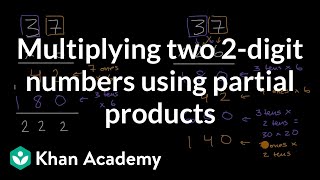
Multiplying with partial products is a powerful strategy that helps students break down multi‑digit multiplication into manageable pieces. By separating each number into its place values, multiplying each part, and then adding the results, learners develop a stronger sense of place value and improve accuracy. A well‑designed multiplying with partial products worksheet provides the structure needed for focused practice and confidence building.
Understanding the Partial Products Method
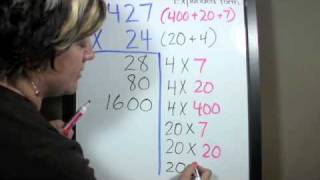
At its core, the partial products method rewrites each factor as a sum of its place‑value components. For example, to multiply 43 × 27:
- 43 = 40 + 3
- 27 = 20 + 7
Then multiply every combination:
- 40 × 20 = 800
- 40 × 7 = 280
- 3 × 20 = 60
- 3 × 7 = 21
Finally, add together all four partial products:
800 + 280 + 60 + 21 = 1,161.
How a Worksheet Guides Practice
A typical Multiplying With Partial Products Worksheet presents a table where students fill in each step:
ProblemPartial ProductsAnswer 43 × 27800, 280, 60, 211,161 24 × 35 46 × 19Students write the breakdown, list each partial product, and then compute the final answer. This visual layout reinforces the sequence of steps and makes it easy to review mistakes.
Step‑by‑Step Example: Solving 24 × 35
Let’s walk through the second problem on the worksheet.
- Break down the numbers: 24 = 20 + 4, 35 = 30 + 5.
- Multiply each part:
- 20 × 30 = 600
- 20 × 5 = 100
- 4 × 30 = 120
- 4 × 5 = 20
- Add together all four results: 600 + 100 + 120 + 20 = 840.
The worksheet entry would read “600, 100, 120, 20” in the Partial Products column and “840” in the Answer column.
Why Use a Partial Products Worksheet?
Regular practice with a dedicated worksheet offers several proven benefits:
- Deepened place‑value understanding: Students see how tens, hundreds, and units interact during multiplication.
- Reduced calculation errors: Isolating each product limits the chance of mis‑aligning digits.
- Improved fluency: Repetition builds speed and confidence, making the method feel natural.
Tips for Getting the Most Out of Your Worksheet
- Start simple. Begin with two‑digit numbers before moving to three‑digit factors.
- Use visual aids. Highlight each place value with different colors or draw a grid to keep components separate.
- Check your work. After adding the partial products, reverse the process by estimating the size of the answer to ensure it makes sense.
- Keep going! Check out the next lesson and practice what you're learning: Many online math platforms provide follow‑up activities that extend the worksheet concepts to word problems and real‑world scenarios.
Let’s Add a Challenge: Multiplying Three‑Digit Numbers
Once students master two‑digit problems, introduce a three‑digit example such as 146 × 27. The breakdown looks like this:
- 146 = 100 + 40 + 6
- 27 = 20 + 7
Partial products:
- 100 × 20 = 2,000
- 100 × 7 = 700
- 40 × 20 = 800
- 40 × 7 = 280
- 6 × 20 = 120
- 6 × 7 = 42
Now add together all four (actually six) results: 2,000 + 700 + 800 + 280 + 120 + 42 = 3,942.
Extending the Method to Decimals
Partial products also work with decimals. Here’s a quick illustration:
3.4 × 2.5
- 3.4 = 3 + 0.4
- 2.5 = 2 + 0.5
Partial products:
- 3 × 2 = 6
- 3 × 0.5 = 1.5
- 0.4 × 2 = 0.8
- 0.4 × 0.5 = 0.20
Adding them yields 6 + 1.5 + 0.8 + 0.20 = 8.5.
Hello everybody out there in math lab today we are learning how to apply this technique to real‑world problems
Imagine you need to calculate the total cost of 27 boxes of crayons, each containing 43 crayons. Using the partial products method, you quickly find the total number of crayons without a calculator, reinforcing both multiplication skills and practical reasoning.
Learn How to Use the Worksheet Effectively
To learn how to use a partial products worksheet efficiently, follow these steps each session:
- Read the problem aloud to ensure comprehension.
- Write the place‑value breakdown on a separate line.
- Calculate each partial product, checking work with mental math when possible.
- Record the partial products in the worksheet column.
- Sum the partial products, double‑checking the addition.
- Reflect on any mistakes and note strategies that helped.
Let’s Practice Together
Here’s a different problem for you to solve:
34 × 24 = ?
Break the numbers into place values, multiply each part, and add together all four results. Once you’ve found the answer, compare it with a partner or use a calculator to verify.
Keep Going! Check Out the Next Lesson and Practice What You're Learning
After completing a worksheet, students should move on to the next set of problems or a short video lesson that demonstrates the method in action. Consistent practice solidifies the process and prepares learners for more complex multiplication tasks, such as multiplying fractions or solving algebraic expressions.
Conclusion
A Multiplying With Partial Products Worksheet is more than a collection of problems; it is a structured pathway to deeper number sense, reduced errors, and lasting fluency. By consistently learning how to break numbers apart, multiply each component, and add together all four (or more) partial products, students gain confidence that extends beyond the classroom. Keep practicing, explore the suggested next lessons, and watch multiplication become a natural, enjoyable skill.


![4th Grade: PARTIAL PRODUCTS MULTIPLICATION [4 digit by 1 digit and 2 digit by 2 digit]](https://i.ytimg.com/vi/aOQ_hvQAQmU/mqdefault.jpg)