Understanding Non‑Literal Phrases: Definition and Importance
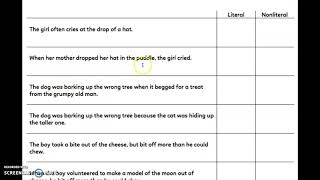
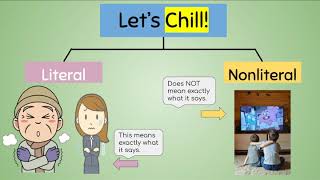
In everyday communication, speakers often rely on non‑literal phrases to add color, humor, or emphasis to their messages. Unlike literal language, which conveys exactly what the words mean, non‑literal language uses figures of speech—such as idioms, metaphors, and hyperbole—to express ideas indirectly. Recognizing these expressions is essential for readers of all ages, especially students who must meet standards like CCSS.ELA‑LITERACY.RL.3.4, which asks them to determine the meaning of words and phrases as they are used in a text.
Common Types of Non‑Literal Phrases
Idioms
Idioms are fixed expressions whose meanings cannot be deduced from the individual words. Examples include:
- Break the ice – to start a conversation in a comfortable way.
- Hit the sack – to go to bed.
- Spill the beans – to reveal a secret.
Metaphors
A metaphor directly compares two unlike things, suggesting that one is the other.
- Time is a thief – time steals moments from us.
- Her smile was sunshine – her smile brought warmth and happiness.
Similes
Similes use like or as to compare.
- Busy as a bee – extremely active.
- Cold as ice – very cold.
Hyperbole
Hyperbole exaggerates for effect.
- I've told you a million times – an emphatic way to stress repetition.
- He ran faster than the wind – indicating great speed.
Personification
Personification gives human traits to non‑human objects.
- The wind whispered through the trees – the wind is described as if it can whisper.
- The city never sleeps – the city behaves like a person who stays awake.
Non Literal Phrases Examples in Classroom Settings
Teachers often incorporate non‑literal language into lessons to develop students' critical‑thinking and comprehension skills. Below are practical ways to use these phrases in a 3rd‑grade classroom, aligning with the Literal and Nonliteral Lesson framework.
- Read‑Aloud Sessions – Choose a story that contains idioms and ask students to identify them. For instance, after hearing “The cat was out of the bag,” discuss the literal meaning (a cat escaped) versus the figurative meaning (a secret was revealed).
- Interactive Videos – Create short animated clips using Powtoon. Show