What Are Number Bonds and Why They Matter in Kindergarten?
Number bonds are the building blocks of early math fluency. In kindergarten, they help children understand how numbers can be split and combined to make the same total. By mastering number bonds, young learners develop a mental toolbox for addition, subtraction, and later multiplication. This foundational skill is essential for solving everyday problems, such as counting objects, sharing snacks, or figuring out how many more blocks are needed to reach a target.
How Number Bonds Work: Composing Numbers to 20
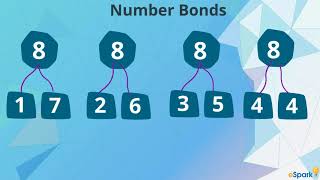
In a typical Number Bonds Kindergarten lesson, teachers focus on numbers up to 20. Children explore multiple ways to create each total, often using visual aids like 5‑square and 10‑square grids. For example, the number 12 can be made with the pairs 1 + 11, 2 + 10, 3 + 9, 4 + 8, 5 + 7, and 6 + 6. By seeing these combinations, kids learn that numbers are flexible and can be broken down in many ways.
eSpark Quest: A Fun Way to Make Number Bonds
The eSpark Quest series offers an engaging introduction to number bonds. In the “How to Make Number Bonds” episode, bright animation and clear narration guide children through the process of pairing numbers. The video, designed by CREDITS Animation & Design and narrated by Sasha‑Lee Heekes, uses catchy music and colorful visuals to keep kindergarteners focused. The short, energetic format makes it easy for teachers to integrate the clip into a daily math routine.
Try This Hands‑On Activity at Home
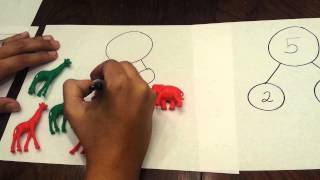
Parents and homeschool teachers can reinforce number‑bond concepts with a simple DIY activity. Gather a set of small objects—such as pom‑poms, beads, or LEGO pieces—and follow these steps:
- Choose a target number. Start with numbers between 5 and 10, then progress to 20.
- Make a pair. Ask the child to create two groups that add up to the target.
- Swap and repeat. Encourage the child to find at least three different pairs for the same total.
- Record the pairs. Write each combination on a piece of paper to track progress.
This activity, popular on social media under hashtags like #homeschool, #kindergarten, and #diylearning, turns abstract numbers into tangible experiences.
Integrating Number Bonds Into Everyday Play
Learning doesn’t have to stop at the desk. Here are a few everyday moments where number bonds naturally appear:
- Snack time. Ask a child to split a snack into two equal parts and then combine different portions to reach a desired amount.
- Storytime. While reading a picture book, pause to count objects on each page and discuss how they add up to a total.
- Outdoor games. Use hopscotch squares to practice jumping a certain number of spaces, then ask the child how many jumps make a larger number.
Why Number Bonds Build Confidence in Math
When kindergarteners see that numbers can be broken down and rebuilt in many ways, they gain confidence in tackling