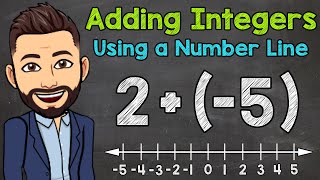
Understanding the Number Line for Negative and Positive Numbers
The number line is a visual tool that helps students grasp the relationship between negative and positive values. By placing zero at the center and extending in both directions, it provides a clear picture of how numbers increase, decrease, and interact during addition and subtraction.
Why a Number Line Works
When learners see numbers arranged in order, they can:
- Visualize the distance between values.
- Identify the direction of movement (left for subtraction, right for addition).
- Connect abstract symbols to concrete positions.
These benefits are especially important when dealing with negative numbers, which often feel less intuitive than their positive counterparts.
Adding on a Number Line
Adding a positive number moves the point to the right, while adding a negative number moves it to the left. The following steps illustrate the process:
- Start at the first number. Place a finger or a marker on that value.
- Determine the sign of the second number. Positive means move right; negative means move left.
- Count the absolute value. For example, adding + 5 means counting five spaces to the right.
- Mark the landing spot. The point where you stop is the sum.
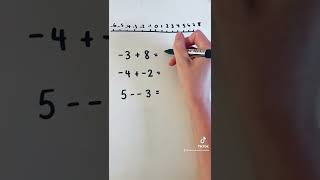
In the video “Adding and Subtracting Negative and Positive Numbers on a Number Line,” you’ll see this method demonstrated with clear, step‑by‑step visuals.
Example: +7 + (‑3)
1. Start at +7.
2. The second number is –3, so move three spaces left.
3. You land on +4.
Thus, +7 + (‑3) = +4.
Subtracting on a Number Line
Subtraction can be thought of as “adding the opposite.” When you subtract a positive number, you move left; when you subtract a negative number, you move right. Follow these steps:
- Locate the first number on the line.
- Identify the sign of the number being subtracted.
- If it’s positive, move left by its absolute value; if it’s negative, move right.
- Record the final position as the difference.
Example: 5 – (‑2)
1. Begin at 5.
2. Subtracting –2 means moving right two spaces (because subtracting a negative is the same as adding).
The result is 7.
Common Mistakes and How to Avoid Them
- Forgetting direction. Remember: right = increase, left = decrease.
- Mixing up signs. Write the sign of each number clearly before you start moving.
- Skipping zero. Zero is the pivot point; crossing it changes the sign of the result.
Practicing with a physical or digital number line can reinforce these concepts. The free lessons at Vivid Math include interactive number‑line activities that