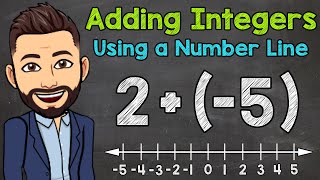
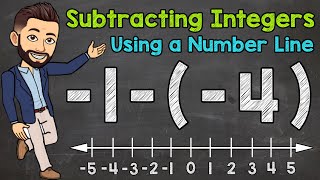
Understanding Number Lines Positive And Negative
Number lines are a visual tool that help students and lifelong learners see how numbers relate to each other. When a number line includes both positive and negative values, it becomes a powerful way to explore addition, subtraction, and the concept of direction. This article explains how to use number lines for positive and negative integers, offers practical strategies for classroom and home practice, and points you to free online resources for extra support.
Why a Number Line Matters
Using a number line makes abstract ideas concrete. When you place zero in the middle, numbers to the right are positive, and numbers to the left are negative. This simple layout lets learners see that:
- Moving right adds value.
- Moving left subtracts value.
- Crossing zero changes the sign of a number.
These visual cues are especially helpful for students who struggle with the rules of signed numbers.
Adding Integers on a Number Line
To add a positive or negative integer, start at the first number and move the appropriate distance:
- Identify the starting point on the line.
- Determine the direction: right for a positive addend, left for a negative addend.
- Count the number of steps equal to the absolute value of the addend.
- Mark the landing spot; that is the sum.
For example, to compute 5 + (‑3), begin at 5, move three steps left, and land on 2. This method aligns with the video “How to add directed numbers using a number line” and reinforces the idea that adding a negative is the same as moving left.
Subtracting Integers on a Number Line
Subtraction can be thought of as adding the opposite. When you subtract a negative number, you actually move right. Follow these steps:
- Start at the first integer.
- Identify the number being subtracted.
- Flip its sign (‑ becomes +, + becomes ‑).
- Move in the direction indicated by the new sign.
For instance, 4 – (‑2) becomes 4 + 2. Starting at 4, move two steps right and land on 6. The video “Integer Subtraction Using a Number Line (EASY)” demonstrates this technique with clear, silent‑math explanations.
Using Number Lines for Real‑World Problems
Beyond