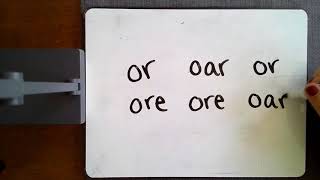
Mastering the Homophones: Understanding the Difference between Ore, Oar, and Or
When it comes to words that sound alike but have different meanings, few sets are as challenging as ore, oar, and or. These homophones can be tricky even for native English speakers, but with practice and education, anyone can learn to tell them apart.
What are Homophones?
Homophones are words that are pronounced the same but have different meanings and, often, different spellings. They can be confusing, especially in sentences where the context is unclear. The set of ore, oar, and or is a great example of homophones in action.
Ore: A Mineral Resource
Ore refers to a naturally occurring mineral substance that contains valuable minerals or metals. Ore can be extracted from the earth through mining and processed to extract the desired minerals. For example, iron ore is a type of ore that is rich in iron and is used to produce steel.
Example Sentence: The mining company extracted a large quantity of iron ore from the depths of the earth.
Oar: A Paddling Tool
An oar is a long, flat blade used to propel a boat through the water. Oars are typically used in rowing, where the rower uses the oar to move the boat forward. For example, a rower might use an oar to paddle across a lake or river.
Example Sentence: The rower dipped her oar into the water, propelling the boat forward with ease.
Or: A Conjunction
Or is a conjunction that is used to indicate an alternative or a choice between two options. For example, "I'll go to the store or I'll stay home" means that the speaker has two options and is choosing between them.
Example Sentence: Do you want to go to the movies or stay home and watch TV?
Teaching Homophones to Children
Teaching homophones to children can be a fun and engaging experience with the right tools and resources. One such tool is Phonics Monsters, a hands-on educational tool that makes teaching phonics easy, exciting, and fun for children.
Phonics Monsters uses a variety of games and activities to teach children the basics of phonics, including the differences between homophones like ore, oar, and or. By practicing with these games and activities, children can develop their phonics skills and improve their reading abilities.
Conclusion
Mastery of homophones like ore, oar, and or requires practice and education. By understanding the meanings and uses of each word, anyone can improve their communication skills and avoid confusion. Whether you're a native English speaker or a learner of the language, the key to mastering homophones is to practice regularly and seek out educational resources like Phonics Monsters.
Additional Resources
For more information on homophones and phonics, check out the following resources:
- Can you tell a paddle from a peridot?
- Phonics Monsters: A hands-on educational tool for teaching children to read.
- Learn how to pronounce the words OR, a great resource for learners of English.