What Is an Argumentative Essay?
An argumentative essay is a piece of academic writing that presents a clear position on a debatable topic and supports it with evidence, reasoning, and persuasive techniques. Unlike a descriptive or narrative essay, the focus is on convincing the reader that your viewpoint is the most logical and credible. This type of essay is common in high‑school and university courses because it develops critical thinking, research skills, and the ability to construct a coherent argument.
Why Create an Outline First?
Before you start writing, a well‑structured outline acts as a roadmap that keeps your essay focused and organized. It helps you:
- Identify the main claim you will defend.
- Arrange supporting evidence in a logical order.
- Spot gaps in research or reasoning early on.
- Save time during the drafting phase.
Many students skip this step and end up with scattered paragraphs. A clear outline prevents that by ensuring each part of the essay works together toward a single, persuasive goal.
Step‑by‑Step Guide for Writing an Outline
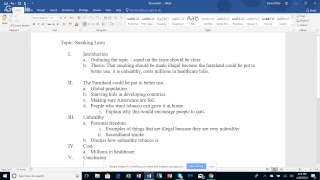
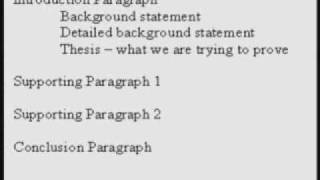
Below is a practical framework you can adapt to any argumentative topic. The structure mirrors the classic five‑paragraph model but can be expanded for longer assignments.
- Introduction
- Hook – a surprising fact, quote, or question to capture attention.
- Background – brief context that frames the debate.
- Thesis statement – a concise sentence that states your main argument.
- Body Paragraph 1: First Supporting Point
- Topic sentence that links directly to the thesis.
- Evidence – statistics, expert testimony, or real‑world examples.
- Explanation – show how the evidence backs your claim.
- Transition – a sentence that leads to the next point.
- Body Paragraph 2: Second Supporting Point
- Another clear topic sentence.
- Different type of evidence (e.g., a case study) to diversify your argument.
- Analysis that connects the evidence to the overall thesis.
- Transition to the counterargument.
- Body Paragraph 3: Counterargument and Refutation
- Present a credible opposing view.
- Explain why this view has merit – this builds trust with the reader.
- Refute the counterargument with evidence or logical reasoning.
- Re‑affirm your original stance.
- Conclusion
- Restate the thesis in new words.
- Summarize the key supporting points.
- End with a call‑to‑action, a prediction, or a thought‑provoking question.
Integrating Resources and Tips from Experts
When you need help making your case, consider resources like the British Council’s “How to Write an Argumentative Essay.” Their guide emphasizes clarity, balanced evidence, and a strong concluding statement. Additionally, educational channels such as Hi, welcome to my channel Bubbly English! This video has the four easy steps in crafting a persuasive essay, offering visual examples that complement the written outline.
Key Tips for a Strong Outline
- Use precise language in your thesis – avoid vague phrases.
- Group related evidence together to maintain logical flow.
- Mark where you will insert citations; this saves time during drafting.
- Allocate word counts to each section to ensure balanced development.
Common Pitfalls to Avoid
Even with a solid outline, certain mistakes can weaken your essay:
- Overloading the introduction with too much background information.
- Neglecting the counterargument, which can make your essay appear one‑sided.
- Repeating evidence across paragraphs instead of presenting new support.
- Skipping transitions, leading to choppy reading experience.
By reviewing your outline for these issues, you can correct them before the first draft.
Putting It All Together
Once your outline is complete, the writing process becomes a series of focused steps rather than a daunting blank page. Start with the introduction, follow the order of your body points, and finish with a compelling conclusion. Remember to revisit the outline as you write; if a new idea emerges, add it to the appropriate section or adjust the existing structure.
Final Thoughts
An effective argumentative essay hinges on a clear, logical outline. By breaking the essay into introduction, supporting paragraphs, a counterargument, and conclusion, you ensure each component serves the central thesis. Use reputable guides—such as the British Council’s resources—and practical video lessons like those from Bubbly English to refine each step. With a solid outline in hand, you’ll be ready to craft a persuasive essay that convinces readers and earns top marks.





![How to write an outline | Writing Essentials [FREE example outlines!]](https://i.ytimg.com/vi/b5B5o3dbevg/mqdefault.jpg)